3D animation · OSSEOTOUCH Magnetic Mallet
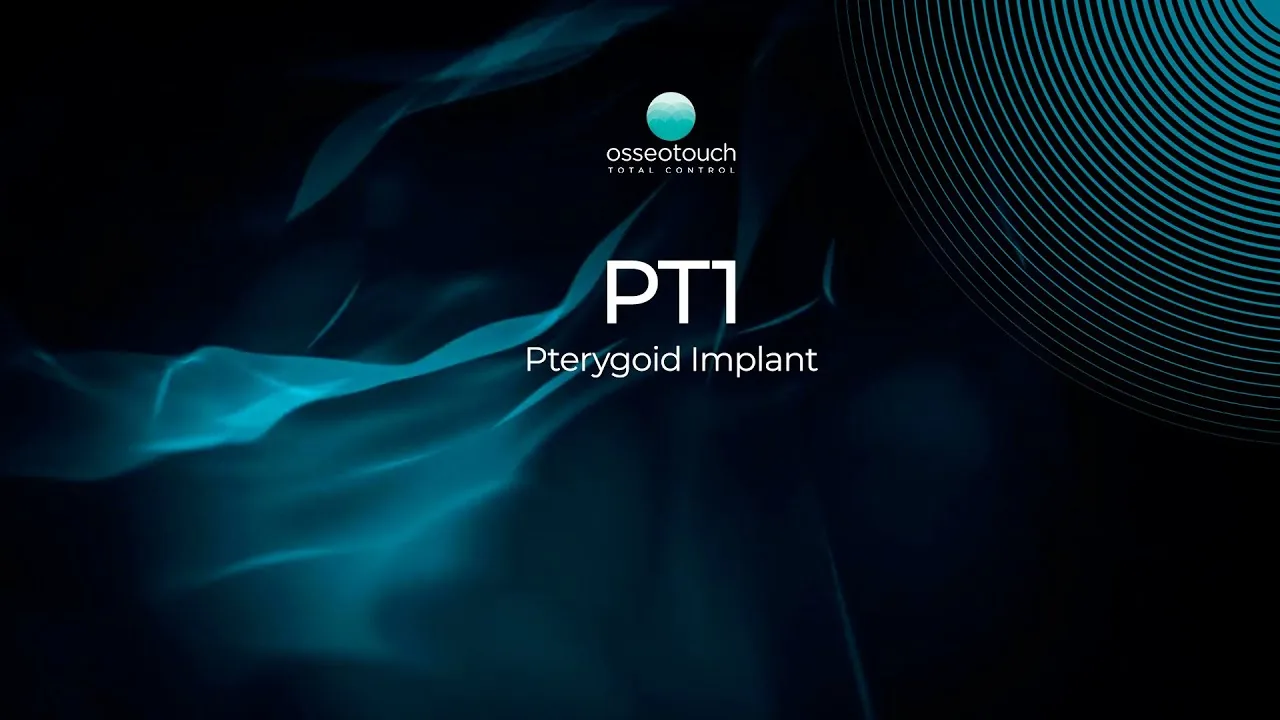
PT1 — Pterygoid implant
Step-by-step 3D animation of the magnetodynamic pterygoid sequence — the osteotomes (PT1 → PT2 → PT3) advancing through the cancellous corridor toward the pyramidal process.
On-axis pterygoid placement · bone condensation using MAGNETODYNAMICS
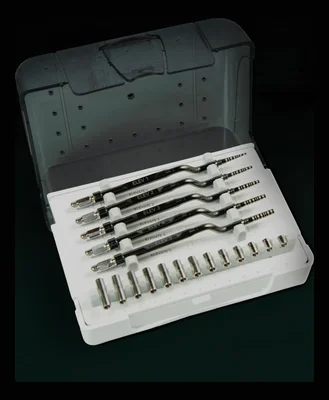
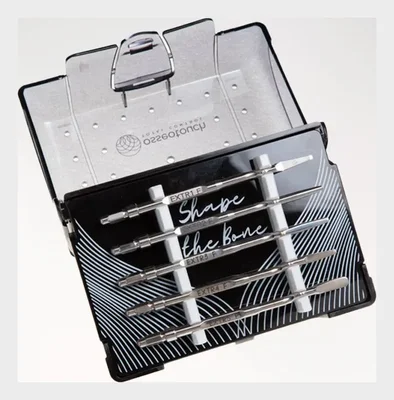
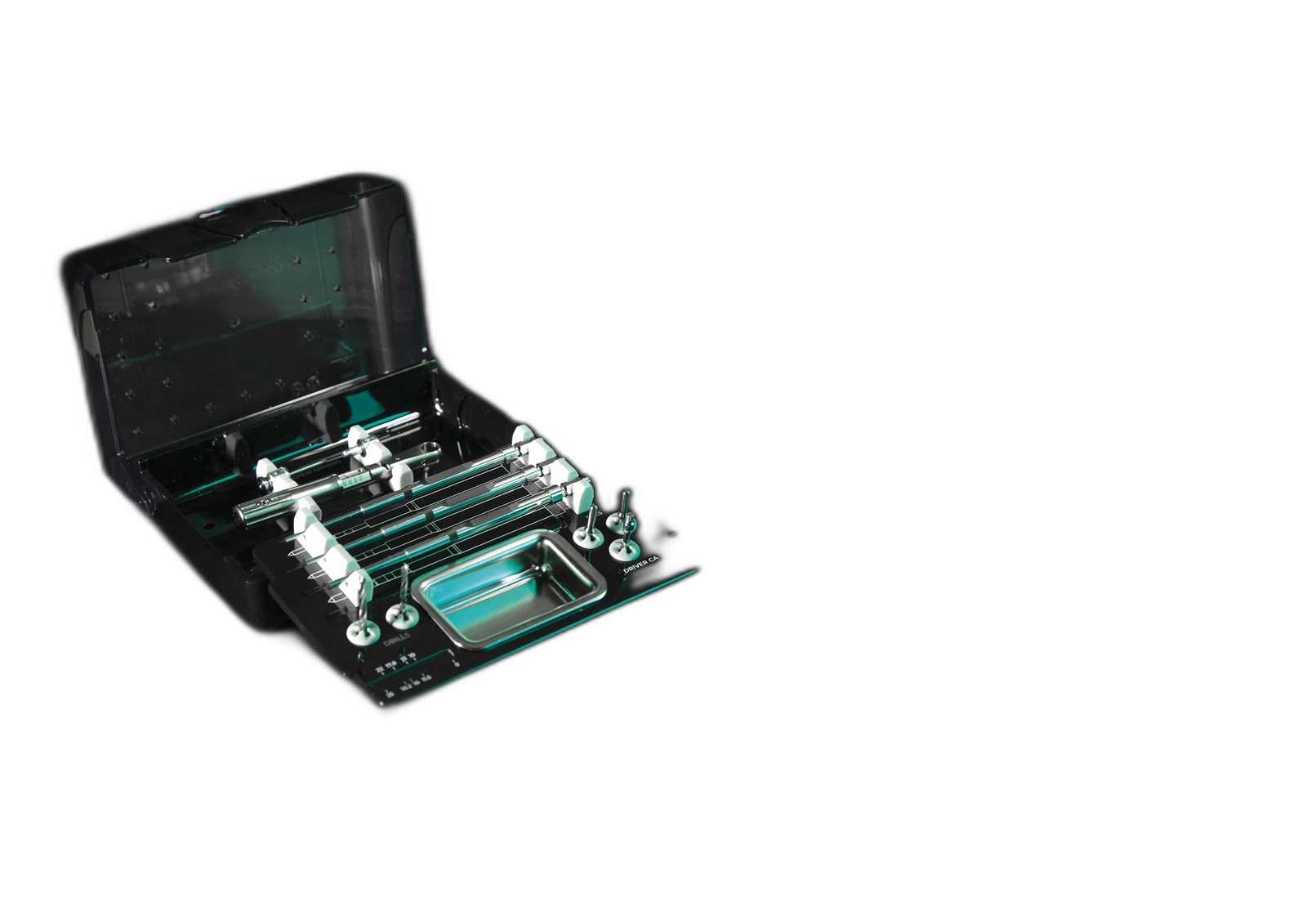
Pterygoid Implant Kit · 3 dedicated osteotomes (PT1, PT2, PT3) · 2 extended pterygoid drills · RADEL autoclavable case
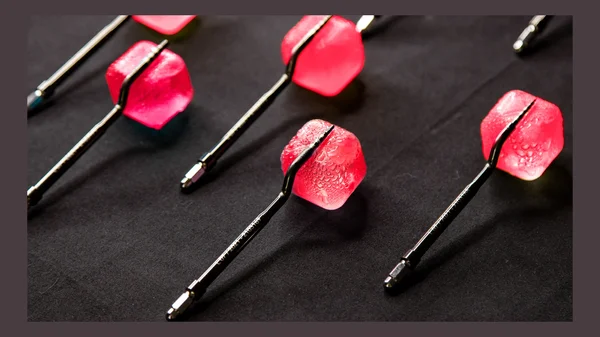
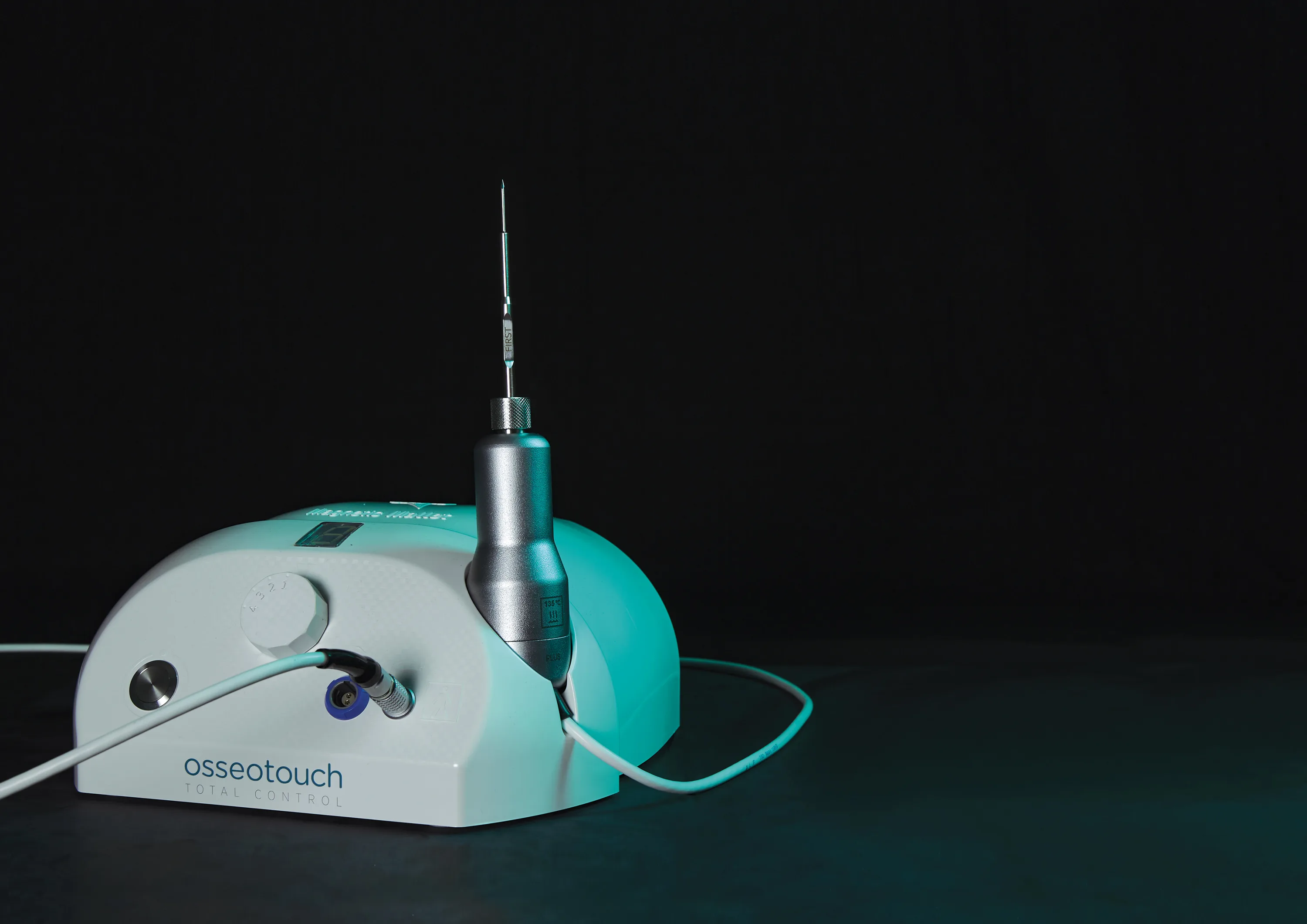
A pterygoid implant kit designed for site preparation using MAGNETODYNAMICS with the OSSEOTOUCH Magnetic Mallet. The 3 dedicated osteotomes advance through the cancellous bone of the pterygoid corridor toward the pyramidal process by axial bone condensation rather than rotary subtraction — preserving the bone matrix, supporting axis control, and aiming to reduce the trajectory drift that compromises pterygoid implant outcomes.
Let’s make this useful to you · PT-1
Start with a question. Explore the details here, or ask our team about the part that matters to you.
No appointment needed to ask.Talk with OSSEOTOUCH Product Specialist in India, your product contact in India.
WhatsApp OSSEOTOUCH IndiaSee the instruments and their descriptions together, before comparing configurations or asking about a particular component.
Start with the original demonstration or protocol on this page. Then ask us about the instrument or step you would like explained.
You do not need to decide on a configuration yet. Tell us which procedures you want to explore and what you already know about Magnetic Mallet.
Pterygoid implant placement requires the surgeon to maintain a single rigorous trajectory across multiple bony layers — through the maxillary tuberosity, into the pterygoid plate, and toward the pyramidal process. Rotary drills work by subtraction and tend to follow the path of least resistance through soft cancellous bone, drifting off the planned axis. Frictional heat at the cancellous-cortical interface adds a thermal risk in a region where the bone is heterogeneous (D1 cortical pterygoid plate + soft cancellous tuberosity).
PT-1 replaces rotary subtraction with bone condensation using MAGNETODYNAMICS in the pterygoid corridor. The 3 dedicated osteotomes (PT1, PT2, PT3) advance through the cancellous bone by lateral expansion — preserving the bone matrix and providing controlled axial advancement. Two extended pterygoid drills address the dense cortical plate when needed. Two parallelism pins support trajectory verification during key preparation steps.
Your next step, in India
Request a demo or explore Pay as you use through your MyOSSEOTOUCH account.
3D animation of the PT-1 kit in action — the Osteotome sequence using MAGNETODYNAMICS (PT1 → PT2 → PT3) advancing through the pterygoid corridor toward the pyramidal process.
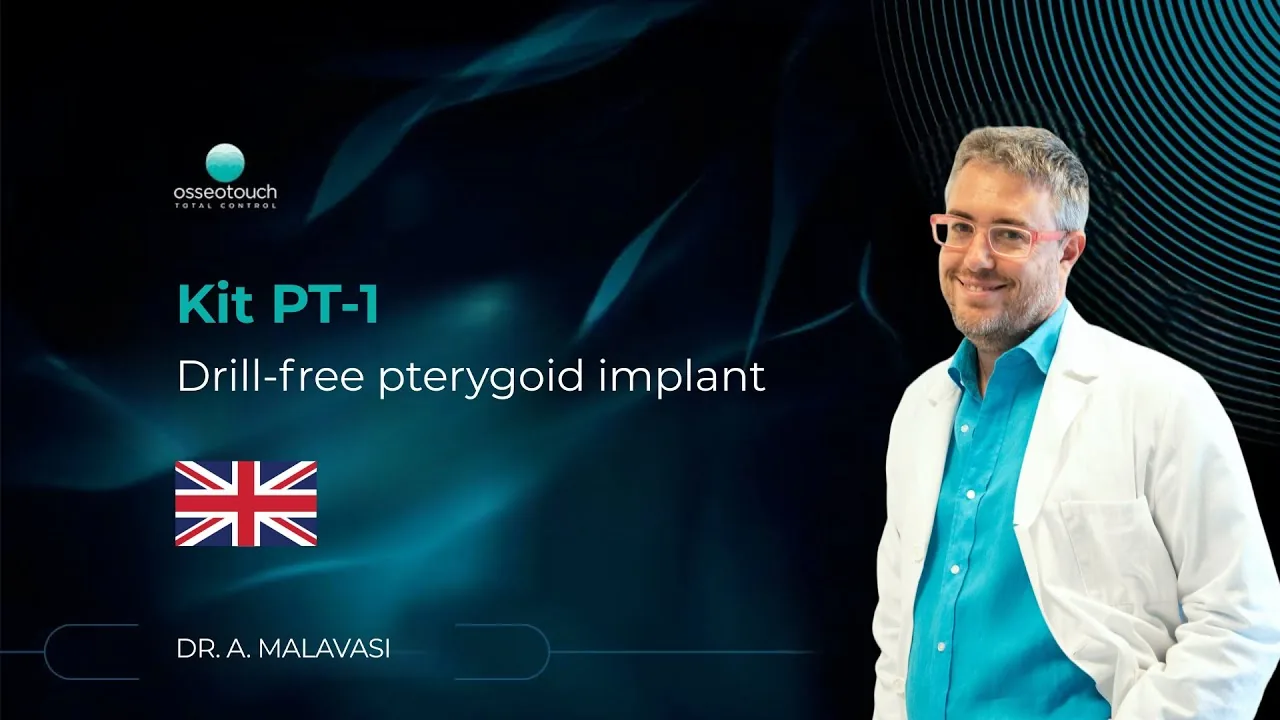
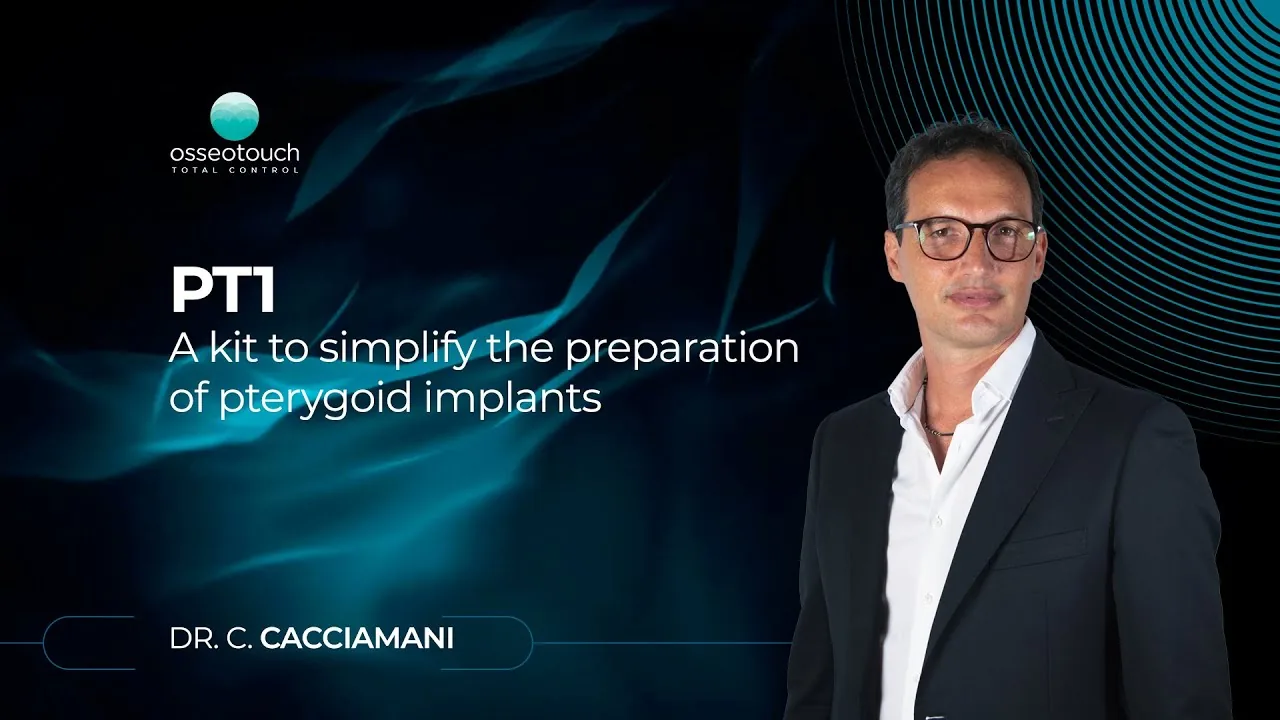
Two documented clinical cases of pterygoid implant placement using MAGNETODYNAMICS with the PT-1 kit.
One handpiece. One pterygoid kit. Six reasons pterygoid implant placement becomes more axis-controlled and bone-preserving than conventional rotary protocols.
Advancement using MAGNETODYNAMICS gives controlled axial feedback between impulses. The system is designed to help maintain the planned trajectory through the cancellous corridor.
Cancellous bone is laterally compacted along the pterygoid corridor instead of being removed. Bone matrix preserved, peri-implant density supported.
Osteotome phase using MAGNETODYNAMICS avoids rotary friction heat; when extended drills are used on the cortical plate, standard rotary irrigation practices apply.
Two extended-height pterygoid drills handle the dense cortical pterygoid plate. Designed for the depth requirements of the pterygoid corridor.
Two parallelism pins support trajectory verification during key preparation steps — allowing course corrections before the implant is committed.
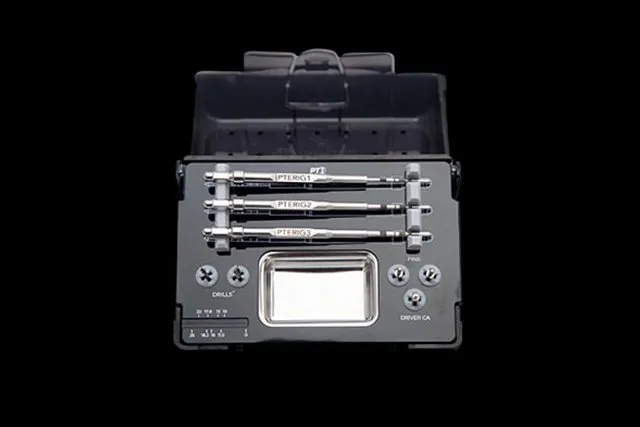
3 osteotomes + 2 drills + 2 pins + drivers + length measurer + adjustable torque wrench, organized in a RADEL autoclavable case.
Talk with our specialist to evaluate PT-1 for your pterygoid implant workflow, check compatibility with your existing Magnetic Mallet handpiece, or ask a product question.
Speak with the OSSEOTOUCH Product Specialist in India. For after-sales support, requests are taken in charge within 24 hours.
Everything required for the preparation using MAGNETODYNAMICS of the pterygoid implant site, organized in a single autoclavable RADEL case.
| Code | Role in sequence |
|---|---|
| PT1 | First entry into the pterygoid corridor, axis establishment |
| PT2 | Progressive cancellous bone condensation toward the pyramidal process |
| PT3 | Final-diameter preparation, axis verification before fixture placement |
Increased height profile dimensioned for the cortical pterygoid plate depth, with handpiece clearance for the pterygoid corridor.
2 parallelism pins for trajectory verification · 1 contra-angle driver · 1 removable tray · 1 length measurer · 1 prosthetic-component driver · 1 fixture driver (torque-wrench connection) · 1 adjustable torque wrench.
Case: RADEL autoclavable surgical case (full kit organization). Reusable surgical components autoclavable according to the manufacturer's IFU. Compatible with new-generation Magnetic Mallet handpieces (osteotomes thread via standard threaded coupling).
Local stock · 2-year device warranty · Product guidance from OSSEOTOUCH Product Specialist in India
PT-1 covers the pterygoid implant scenarios where rotary subtraction or generic kits are most likely to compromise axis control or primary stability.
Pterygoid implant placement provides distal anchorage in atrophic posterior maxilla. In selected cases, the pterygoid trajectory may avoid the need for sinus elevation surgery — subject to clinical judgment.
Distal pterygoid anchorage in full-arch fixed-prosthesis workflows. Two posterior implants engaging the pterygoid plate provide cantilever support for the full-arch prosthesis.
Implant placement engaging the maxillary tuberosity and the pterygoid corridor where conventional posterior implant sites are not viable due to insufficient bone height.
When the planned pterygoid trajectory provides sufficient cortical anchorage and the maxillary sinus floor is not in the implant path, may support an approach that avoids sinus elevation. Subject to clinical judgment.
Local stock · 2-year device warranty · Product guidance from OSSEOTOUCH Product Specialist in India
PT-1 is a pterygoid implant kit designed for site preparation using MAGNETODYNAMICS with the OSSEOTOUCH Magnetic Mallet. The 3 dedicated osteotomes (PT1, PT2, PT3) advance through the pterygoid corridor toward the pyramidal process by bone condensation rather than rotary subtraction. Indicated for atrophic posterior maxilla, full-arch fixed-prosthesis workflows, tuberosity implant placement, and selected cases where sinus elevation can be avoided.
Rotary drills work by subtracting bone and tend to follow the path of least resistance through cancellous tissue, generating frictional heat. Osteotomes designed for use with MAGNETODYNAMICS laterally condense the cancellous bone along the planned trajectory, preserve the bone matrix, and provide controlled axial advancement. The osteotome phase using MAGNETODYNAMICS avoids rotary friction heat; when the extended drills are used on the cortical pterygoid plate, standard rotary irrigation practices apply.
Three dedicated osteotomes (PT1, PT2, PT3), two extended-height pterygoid drills for the D1 cortical pterygoid plate, two parallelism pins for trajectory verification, one contra-angle driver, a removable tray, a length measurer, drivers for prosthetic components and fixture (with torque-wrench connection), and one adjustable torque wrench. All in a RADEL autoclavable case.
In selected cases, yes — when the planned pterygoid trajectory provides sufficient cortical anchorage at the pyramidal process and the maxillary sinus floor is not in the implant path, the pterygoid placement may avoid the need for sinus elevation surgery. The decision is always clinical and case-specific, based on CBCT planning and anatomic assessment.
Yes. Distal pterygoid anchorage is a recognized strategy in full-arch fixed-prosthesis (All-on-X) workflows, where two posterior implants engaging the pterygoid plate provide cantilever support for the prosthesis. PT-1 is purpose-designed for this scenario — including extended-height drills, parallelism pins, and dedicated osteotomes.
The pterygoid corridor requires drills with an increased height profile to reach the dense cortical pterygoid plate at depth without the handpiece interfering with the patient's anatomy. The two extended pterygoid drills in the PT-1 kit are dimensioned specifically for the depth requirements of pterygoid implant placement.
Yes. The reusable surgical components and the RADEL surgical case are autoclavable according to the manufacturer's IFU. Compatible with new-generation Magnetic Mallet handpieces via the standard threaded coupling.
Contact the OSSEOTOUCH Product Specialist in India for documentation, compatibility questions and a quotation. The Magnetic Mallet device has a 2-year warranty. For after-sales requests, use the service page or contact OSSEOTOUCH Product Specialist in India on WhatsApp.
Talk with our team — we'll help you evaluate PT-1 for your pterygoid implant workflow and clarify your questions about the instruments.
Contact the OSSEOTOUCH Product Specialist in India to discuss your workflow.
osseotouchindia@gmail.com
Direct chat with our team.
PT-1 is part of the OSSEOTOUCH Magnetic Mallet system, manufactured by Meta Ergonomica S.r.l. (Italy). ISO 13485. Use restricted to qualified dental professionals according to the instructions for use.
Peer-reviewed research on surgery based on MAGNETODYNAMICS. The studies concern the technique, not this single instrument.
Knowledge for your everyday practice
Clinical cases from India, international webinars and practical resources. Keep learning, ask questions and explore your next step through MyOSSEOTOUCH.
International WhatsApp group
Join the international OSSEOTOUCH community and connect with colleagues.
Ask about Magnetic Mallet, the instruments, or your next step.