
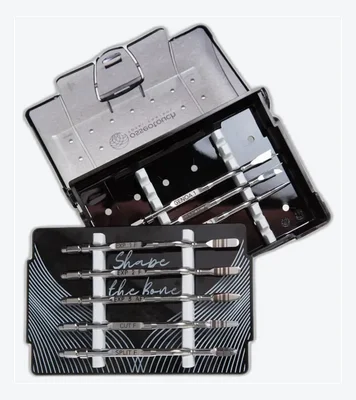
 Ridge Expansion Kit Progressive instruments for horizontal ridge expansion without bone removal. Discover more →
 OSSEOTOUCH · Magnetic Mallet System
Easy-Pin
Membrane fixation in a single tap
GBR Pin Insertion System · titanium pins for membrane fixation, one-hand workflow with the Magnetic Mallet
Titanium pins for barrier membrane fixation in guided bone regeneration. The applicator threads onto the Magnetic Mallet handpiece and delivers the pin in a single calibrated impulse — one-handed, no surgical hammer. Two pin lengths: 3.1 mm (XL) and 3.5 mm (XXL), sterile, single-use.
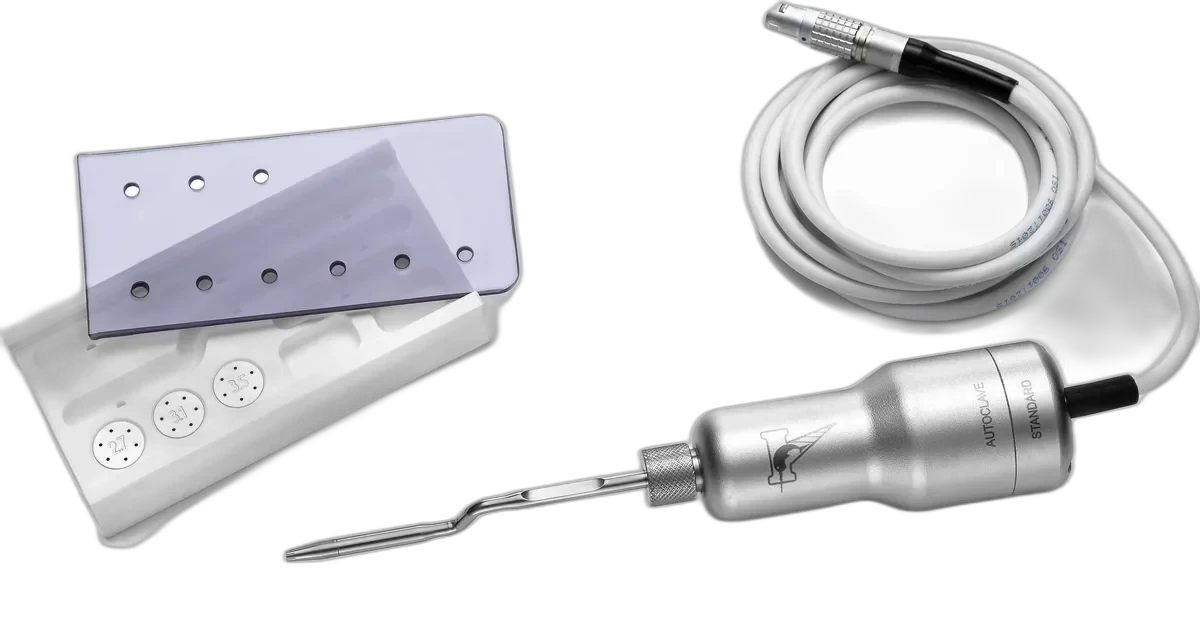
Membrane fixation·GBR·Titanium pins·One-handed·MAGNETODYNAMICS·50-microsecond impulse·Two pin lengths·Membrane fixation·GBR·Titanium pins
Let’s make this useful to you · Easy Pin
What would you like to understand?
Start with a question. Explore the details here, or ask our team about the part that matters to you.
No appointment needed to ask.Get clear on Magnetic Mallet.
Ask your questions, understand how it works and explore the differences between instruments and kits.
Talk to a product specialist Choose a day and time that work for you.What does this include?
See the instruments and their descriptions together, before comparing configurations or asking about a particular component.
How is it used?
Start with the original demonstration or protocol on this page. Then ask us about the instrument or step you would like explained.
Where would I start?
You do not need to decide on a configuration yet. Tell us which procedures you want to explore and what you already know about Magnetic Mallet.
01 The clinical problem
Manual hammer and punch
fight the GBR workflow
Traditional pin insertion demands two hands and two tools — surgical hammer plus manual punch. Force is variable and operator-dependent: tap too hard and the pin bends; too soft and it sits proud. Posterior and lingual sites make it worse, often forcing an assistant to hold the membrane while both surgeon's hands are occupied.
02 The Easy-Pin approach
Insertion using MAGNETODYNAMICS
one hand only
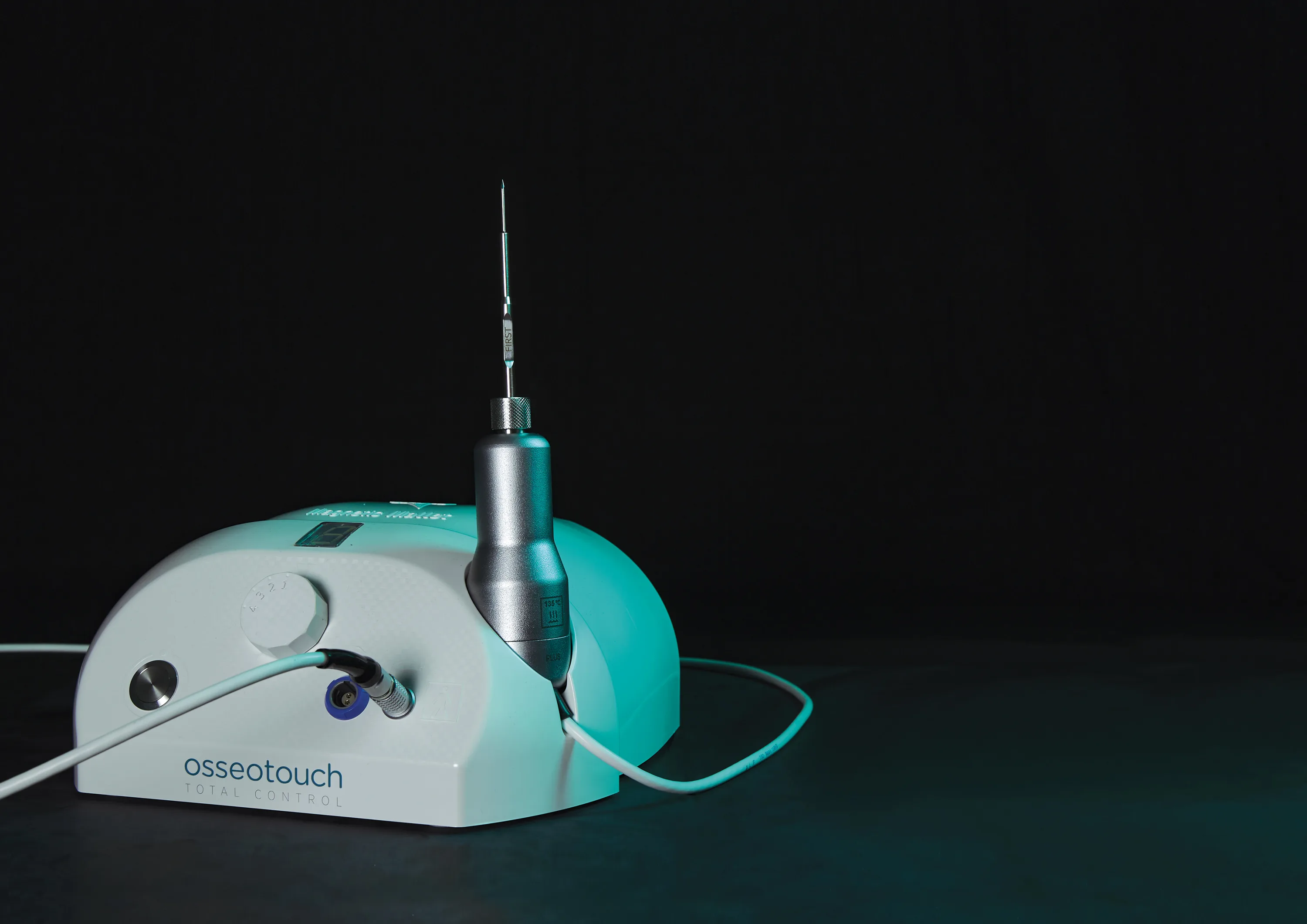
Easy-Pin threads onto the Magnetic Mallet handpiece and delivers the pin in a single 50-microsecond impulse — calibrated, operator-independent. One hand on the handpiece, the other free to position the membrane. Designed to reduce pin bending, support more consistent seating, and access lingual and posterior sites that hammer-and-punch protocols can't easily reach.
02 Six benefits
Six benefits
of pin insertion using MAGNETODYNAMICS
One handpiece. Two pin lengths. Six reasons fixation becomes faster, more predictable, and less hand-intensive in every GBR procedure.
One-handed insertion
The pin applicator threads onto the Magnetic Mallet handpiece. One hand delivers the pin; the other stays free to position and tension the membrane — no second instrument, no second pair of hands.
Designed to reduce pin bending
The 50-microsecond impulse generated by MAGNETODYNAMICS technology drives the pin perpendicular to bone in a single shot. The system is designed to reduce the glancing strikes and progressive bending typical of manual hammer-and-punch protocols.
Reproducible calibrated force
Force is delivered by the device, not the surgeon's wrist. The same insertion energy at 8 a.m. and 6 p.m., across the first pin and the twelfth — operator-independent and fatigue-resistant.
Access to lingual and posterior sites
The angled applicator and the compact handpiece reach lingual, palatal, and distal sites where a hammer-and-punch protocol struggles. Membranes get fixed where they actually need fixing.
Two pin lengths, sterile single-use
3.1 mm (XL) and 3.5 mm (XXL) titanium pins, packaged five per pack, sterile, single-use. Pick the length that matches cortical thickness and bone density.
No surgical assistant required
Solo workflow: the surgeon places the membrane and fixes it without needing an assistant to hold tension. Frees up the team and shortens the chair time on long GBR cases.
Bring GBR fixation using MAGNETODYNAMICS
to your practice
Talk with our specialist to evaluate Easy-Pin for your GBR workflow, check compatibility with your existing Magnetic Mallet handpiece, or ask a question about the instruments.
For a fast reply, message us on WhatsApp — we usually answer within minutes. Email and form requests may take a little longer.
03 The Surgical Kit · 2 components + 2 pin sizes
Two components
and two pin sizes
The base kit contains the applicator designed for use with MAGNETODYNAMICS and an autoclavable storage box. Titanium pins are sold separately in two lengths — sterile, single-use, five per pack.
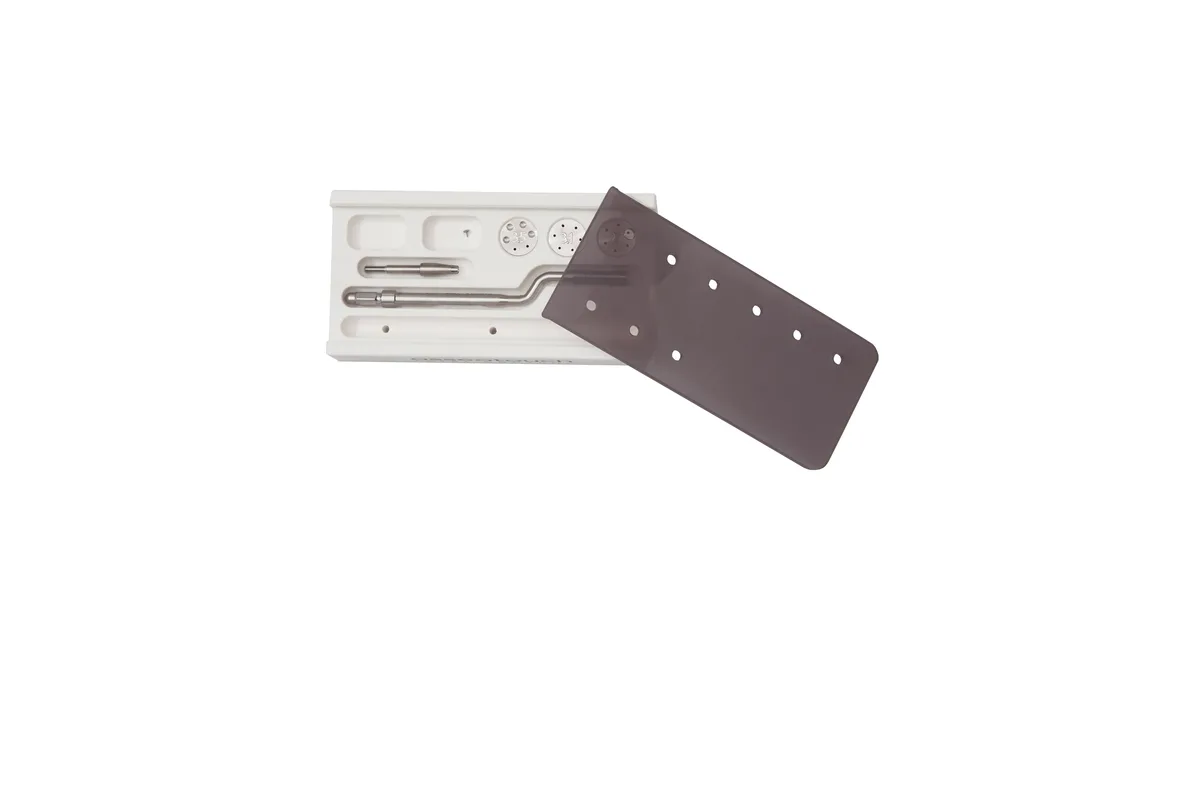
Base kit
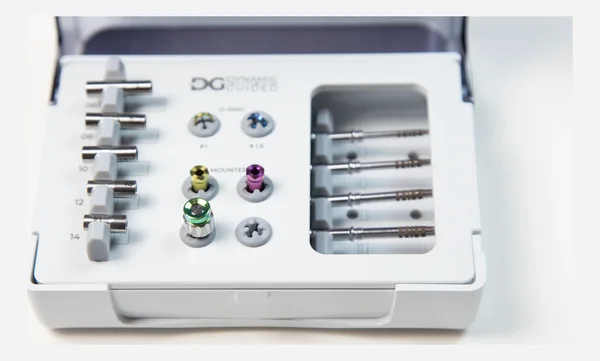
The autoclavable surgical box hosts the INSEP applicator — which threads onto the Magnetic Mallet handpiece and integrates the PNTEP tip for pin engagement and release — plus dedicated pin holders. Reusable case after case with standard autoclave sterilization.
Titanium pins (single-use, sold separately)
| Code | Length | Pack | Indication |
|---|---|---|---|
| PIN-XL | 3.1 mm | 5 pins | Standard cortical thickness (posterior maxilla, mandible) |
| PIN-XXL | 3.5 mm | 5 pins | Thicker cortex or higher membrane tension |
Biocompatible surgical titanium, sterile single-use foil pouches. Power level 1–2 of 4 for typical cortical bone, no pre-drilling required.
Available now Order Easy-Pin directly through OSSEOTOUCH LLC — fast nationwide delivery, product information from our team.
Buy online 04 Clinical applications
Four clinical applications
one workflow
Easy-Pin handles every barrier-membrane fixation scenario in the regenerative workflow — from straightforward GBR to complex combined cases — with the same principle of insertion using MAGNETODYNAMICS and the same one-handed technique.
GBR · Barrier membrane fixation
Stabilize barrier membranes (resorbable or non-resorbable) over the bone defect. The titanium pin anchors the membrane to the underlying cortical bone with a single calibrated impulse — supporting controlled membrane fixation and predictable insertion depth.
Particulate bone graft stabilization
When particulate bone graft is placed under a barrier membrane, pin fixation prevents micromovement during the early healing phase. Easy-Pin positions the membrane firmly over the graft volume without disturbing the particulate material.
Lingual, palatal, and posterior sites
The angled applicator and the maneuverable Magnetic Mallet handpiece reach lingual, palatal, and distal sites where a hammer-and-punch protocol is mechanically restricted. Including the posterior mandible.
Combined implant + GBR procedures
When implant placement and GBR are performed in the same session, the workflow benefits from one-handed pin insertion: the surgeon retains control of the membrane and surrounding tissue without an assistant actively holding instruments.
Order now Add Easy-Pin to your GBR workflow — base kit + initial titanium pin packs through OSSEOTOUCH LLC with fast nationwide delivery.
Buy online 05 Easy-Pin at work
Clinical cases
in real practice
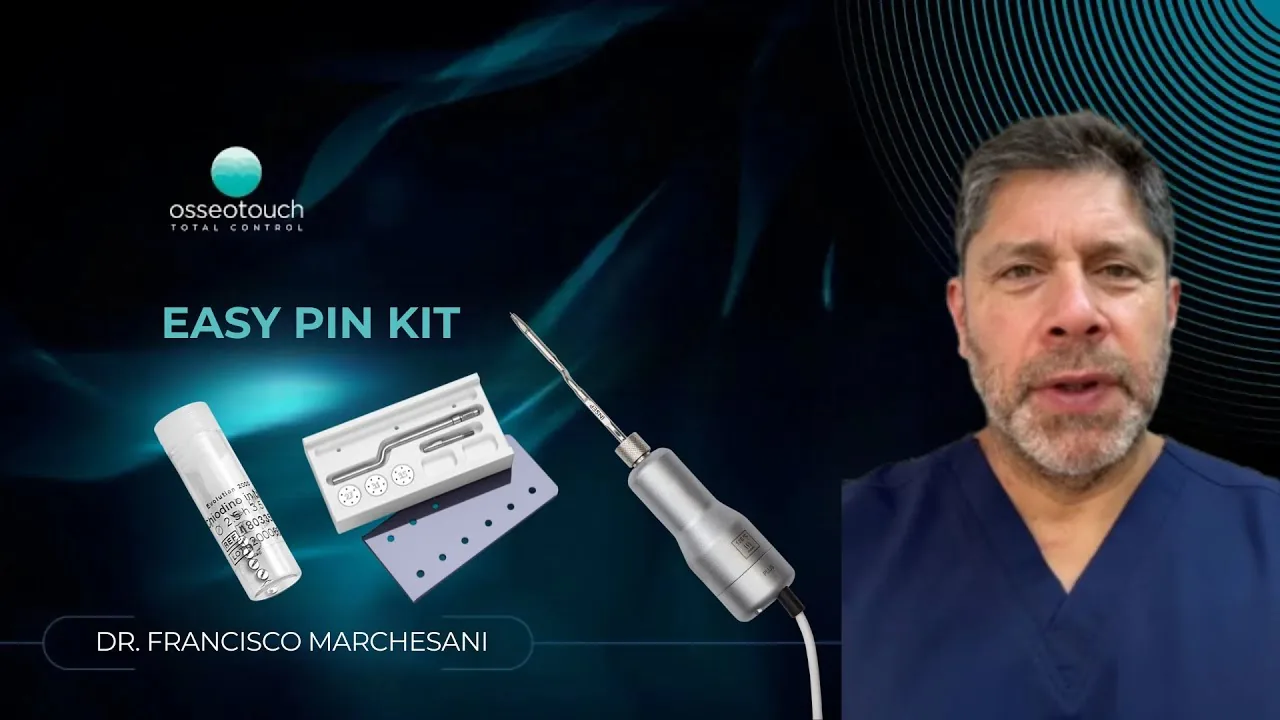
Two documented clinical cases — Easy-Pin used for barrier membrane fixation during real GBR procedures, by international clinicians who use it in their daily workflow.
07 Frequently asked questions
Common questions
about Easy-Pin
What is Easy-Pin and what is it used for?
Easy-Pin is a system based on MAGNETODYNAMICS for inserting titanium pins to fix barrier membranes during guided bone regeneration (GBR). The pin applicator threads onto the OSSEOTOUCH Magnetic Mallet handpiece and delivers the pin in a single calibrated 50-microsecond impulse. Used for GBR membrane fixation, particulate bone graft stabilization, hard-to-reach lingual and posterior sites, and combined implant-plus-GBR procedures.
How does Easy-Pin compare to manual hammer-and-punch protocols?
Manual protocols require two hands and two instruments — a surgical hammer and a manual punch. Force is variable and operator-dependent, with risk of pin bending and inconsistent insertion depth. Easy-Pin delivers a calibrated 50-microsecond impulse with a single one-handed motion: the pin enters perpendicular to bone, designed to reduce pin bending and support more consistent seating.
Do I still need a surgical assistant during pin insertion?
Not for the pin insertion step. With Easy-Pin the surgeon operates the handpiece with one hand and keeps the other hand free to position and tension the membrane. Solo workflow on the fixation step shortens chair time and removes a coordination dependency.
What pin sizes are available?
Two lengths: 3.1 mm (XL) and 3.5 mm (XXL). Both are biocompatible titanium, sterile single-use, packaged five per pack. Pins are sold separately from the base kit. Choose XL for typical cortical thickness, XXL for thicker cortex or higher membrane tension.
Is Easy-Pin compatible with both resorbable and non-resorbable membranes?
Yes. Titanium pins fix any barrier membrane commonly used in GBR — resorbable collagen membranes, non-resorbable PTFE/d-PTFE/titanium-mesh-reinforced membranes — to the underlying cortical bone. The pin acts as a mechanical anchor without restricting membrane material choice.
Can Easy-Pin reach posterior and lingual sites?
Yes. The applicator's angled geometry combined with the maneuverable Magnetic Mallet handpiece reaches lingual, palatal, and distal-mandibular sites where conventional manual hammer-and-punch protocols are mechanically restricted. Particularly valuable for posterior mandibular GBR.
At what power level should Easy-Pin be used?
Power level 1–2 of 4 is typical for cortical bone in standard GBR sites. Higher levels are reserved for unusually dense cortical bone. The 50-microsecond impulse is below the threshold typically perceived as vibration.
What is the FDA regulatory status of the Magnetic Mallet system?
The OSSEOTOUCH Magnetic Mallet is registered with the U.S. FDA under Establishment Registration 3011922183 and product codes EIS · KDG · GEY (21 CFR 872.4565 / 878.4820). U.S. Agent: Thema USA, New York. The Easy-Pin applicator fits new-generation Magnetic Mallet handpieces and is fully autoclavable.
Bring GBR fixation using MAGNETODYNAMICS
to your practice
Whether you're moving from manual hammer-and-punch protocols or adding GBR pin fixation to your existing Magnetic Mallet workflow, our team will help you choose the configuration and clarify your questions about the instruments.
Book a clinical call
Pick a date and time. We will contact you to discuss your workflow.
Email our specialists
cs@osseotouch.com
Direct chat with our team.
U.S. ordersBuy online
Order Easy-Pin through OSSEOTOUCH LLC — fast nationwide delivery and product information from our team.
Easy-Pin is part of the OSSEOTOUCH Magnetic Mallet system, manufactured by Meta Ergonomica S.r.l. (Italy). United States: registered and listed with the U.S. FDA under Establishment Registration 3011922183, product codes EIS · KDG · GEY (Class I, 21 CFR 872.4565 / 878.4820), 510(k)-exempt and subject to general controls. U.S. Agent: Thema USA, New York. ISO 13485. Use restricted to qualified dental professionals according to the instructions for use.
Evidence on this technique
The published research covers surgery based on MAGNETODYNAMICS as a whole. Start from the full list.
OSSEOTOUCH PEER-TO-PEER
See what your peers are doing with Magnetodynamics
Discover how they use it in clinical practice, what advantages they observe and connect directly with them.
75+ resources