
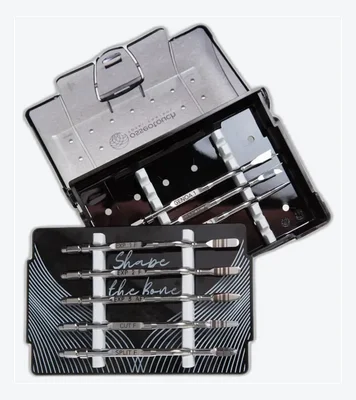
 Ridge Expansion Kit Progressive instruments for horizontal ridge expansion without bone removal. Discover more →
 OSSEOTOUCH · Magnetic Mallet System
Black Ruby
Densify bone without friction
DLC-Coated Osteotomes · five inserts for crestal preparation and osseodensification
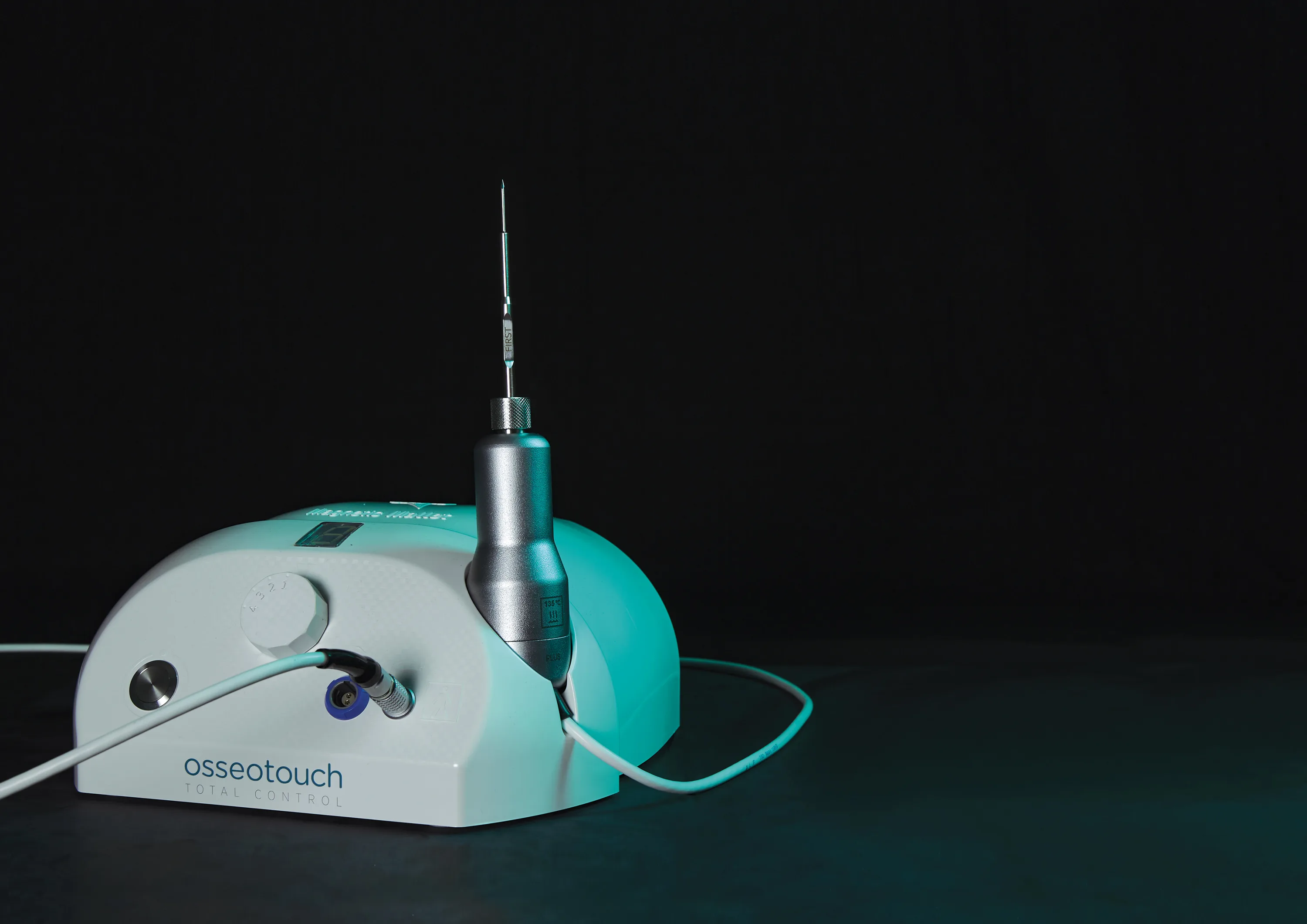
Five DLC-coated osteotomes — Black Ruby 1 through 5 — engineered for low-friction crestal preparation and osseodensification with the Magnetic Mallet. The diamond-like carbon coating reduces the coefficient of friction so the osteotome glides into dense bone (D2/D3) instead of fighting against it, while the impulse generated by MAGNETODYNAMICS technology delivers controlled force without manual mallet strikes.
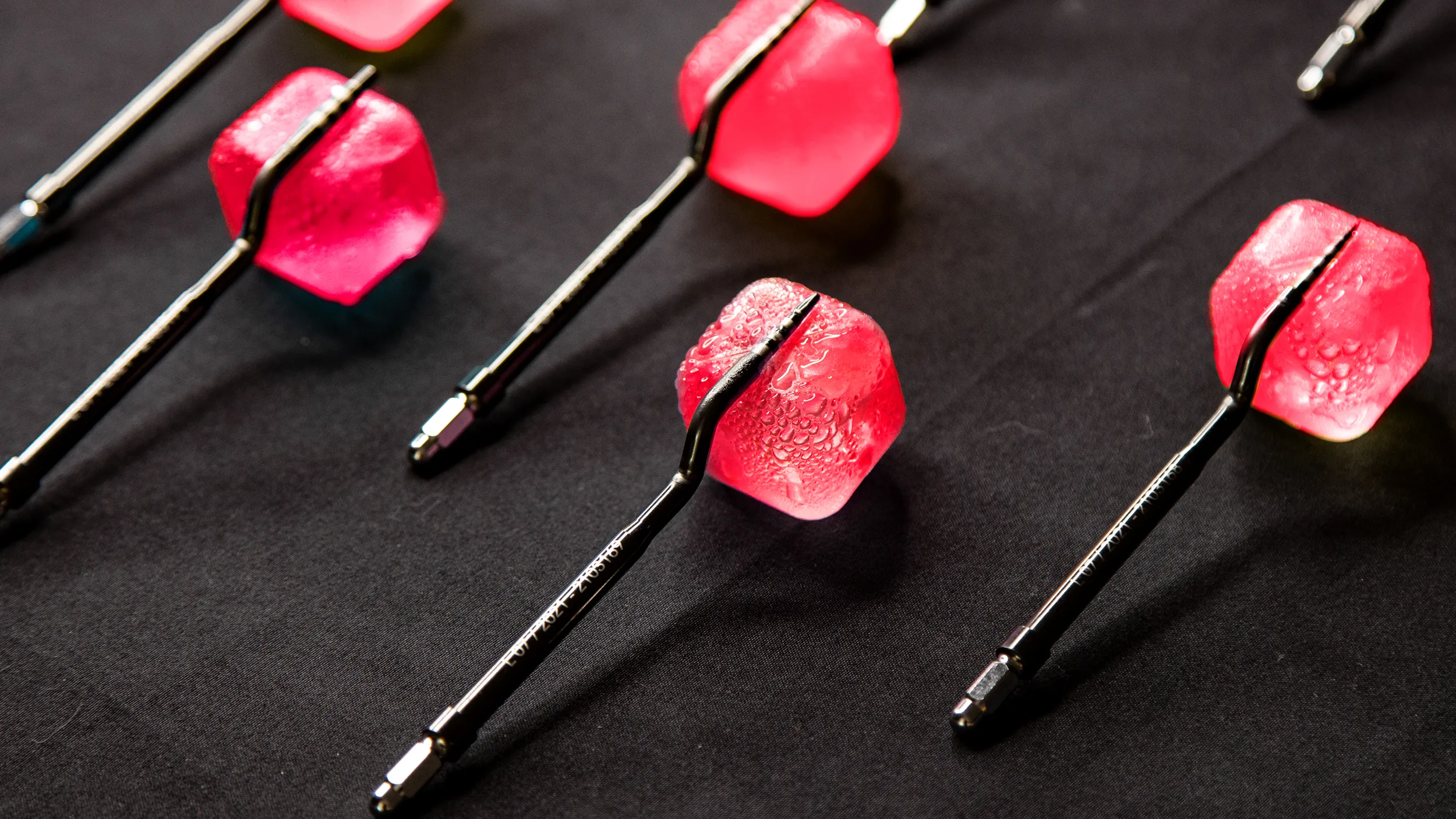
DLC coating·Osseodensification·Low-friction·MAGNETODYNAMICS·D2/D3 bone density·Five osteotomes·Crestal sinus lift·DLC coating·Osseodensification·Low-friction
Let’s make this useful to you · Black Ruby
What would you like to understand?
Start with a question. Explore the details here, or ask our team about the part that matters to you.
No appointment needed to ask.Get clear on Magnetic Mallet.
Ask your questions, understand how it works and explore the differences between instruments and kits.
Talk to a product specialist Choose a day and time that work for you.What does this include?
See the instruments and their descriptions together, before comparing configurations or asking about a particular component.
How is it used?
Start with the original demonstration or protocol on this page. Then ask us about the instrument or step you would like explained.
Where would I start?
You do not need to decide on a configuration yet. Tell us which procedures you want to explore and what you already know about Magnetic Mallet.
00 Watch the introduction
Black Ruby
in motion
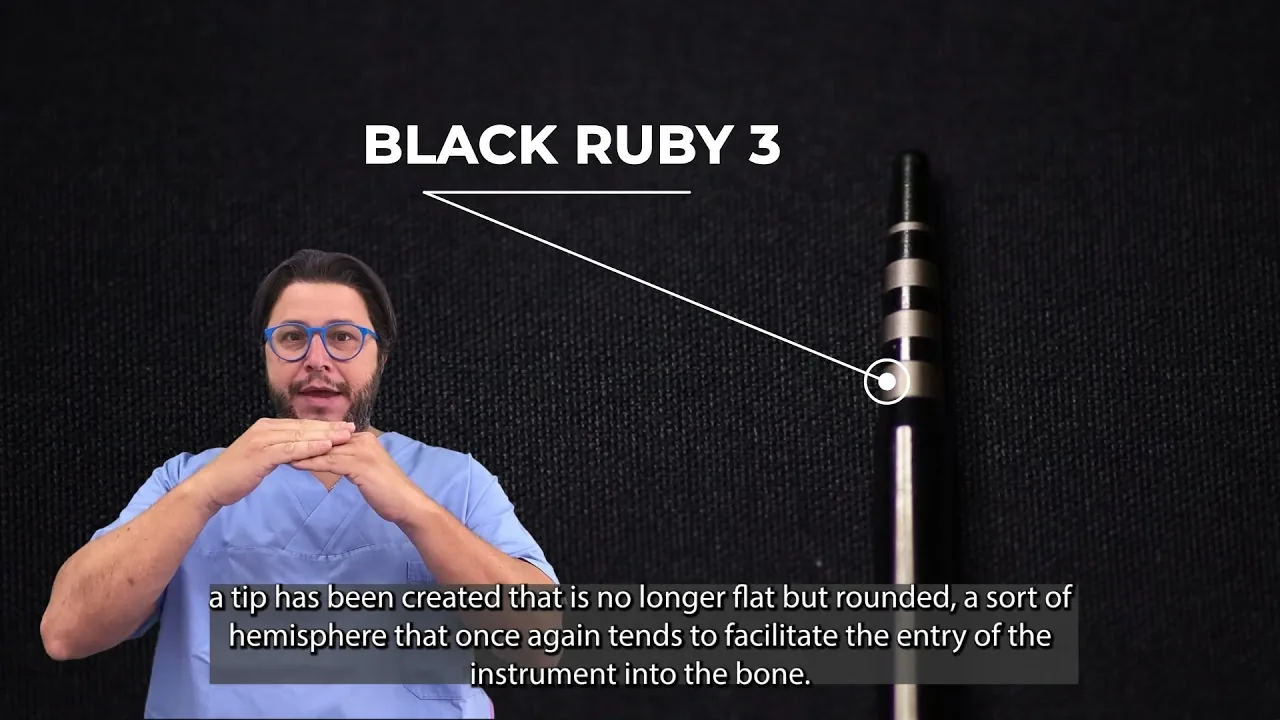
A short introduction to Black Ruby — the DLC-coated osteotomes and the principle of MAGNETODYNAMICS behind low-friction osseodensification.
01 The clinical problem
Rotary drills
remove the bone we want to preserve
Conventional implant site preparation uses rotary cutting drills that remove bone — including the crestal cortex that contributes to primary stability. In soft maxillary bone (D3–D4), narrow alveolar ridges, and post-extraction sockets, drilling can compromise the bone available for osseointegration and the alveolar architecture surrounding the implant.
Heat is generated, irrigation is required, the surgical field becomes wet, and bone shavings are simultaneously removed and lost. Osseodensification — an established approach that compacts bone instead of cutting it — depends on a smooth, progressive advance of an osteotome that is calibrated, low-friction, and operator-independent.
02 The Black Ruby approach
DLC coating + impulse generated by MAGNETODYNAMICS technology
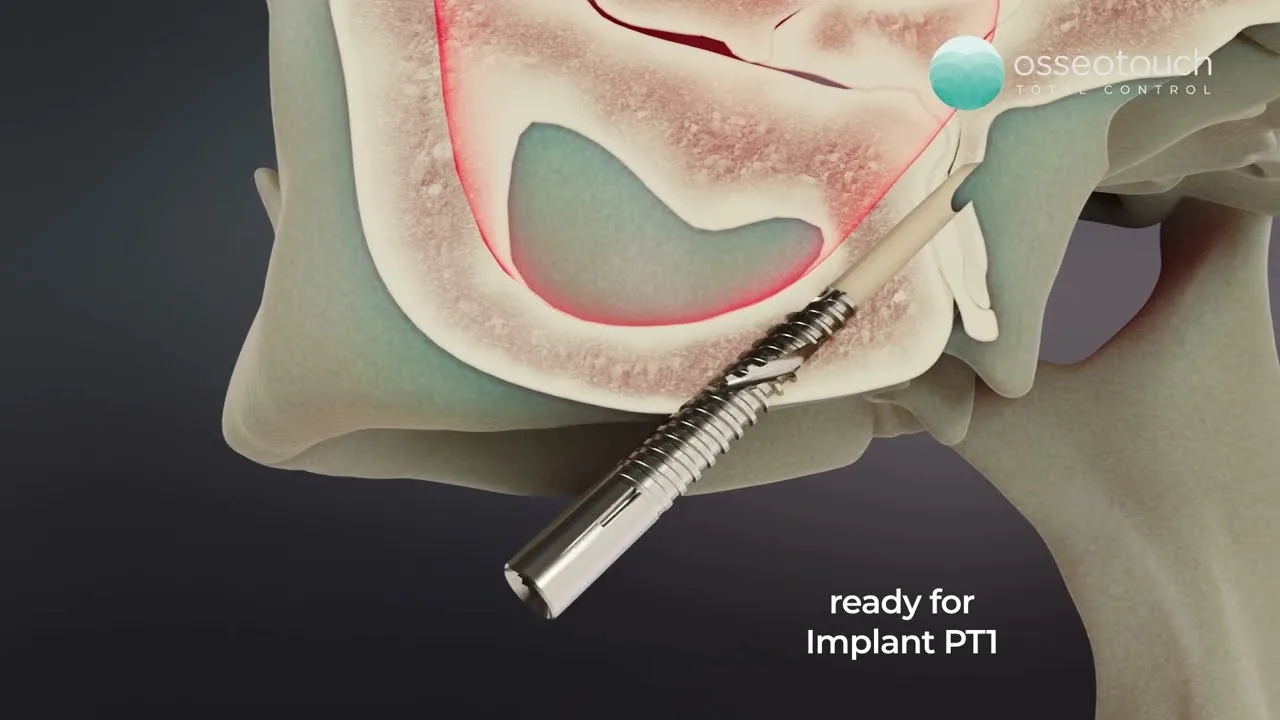
compact bone instead of cutting it
Black Ruby osteotomes are coated with diamond-like carbon (DLC) — an industrial-grade hard coating with a coefficient of friction approximately a quarter of standard surgical stainless steel. The osteotome glides into cortical and dense bone instead of fighting against it. Heat generation drops, tactile feedback becomes predictable, and the bone gets compacted in a controlled progressive way.
Combined with the Magnetic Mallet, force is delivered by the device in a 50-microsecond impulse — no manual mallet strikes, no operator fatigue, no variable pressure. Five osteotomes (BR1 through BR5) cover the standard rotary bur-free implant site preparation sequence, from initial pilot to final preparation, with the same low-friction glide at every step.
02 Six benefits
Six benefits
of DLC-coated osteotomes
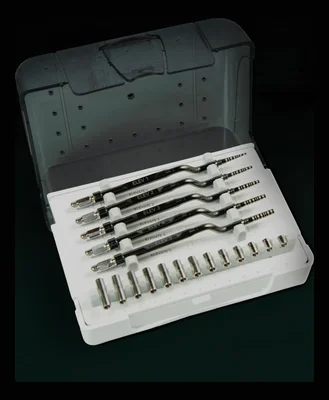
Five Black Ruby osteotomes. One controlled impulse generated by MAGNETODYNAMICS technology. Friction reduced by design — so bone gets compacted, not removed.
Low-friction glide
Coefficient of friction approximately 0.1 — about a quarter of standard surgical stainless steel. The osteotome glides into cortical and dense bone instead of fighting against it.
True osseodensification
Bone is compacted, not cut. The crestal cortex is preserved and the peri-implant bone density typically increases — ready for immediate or staged implant placement.
No manual mallet strikes
The Magnetic Mallet delivers a 50-microsecond impulse generated by MAGNETODYNAMICS technology — calibrated, constant, operator-independent. No fatigue, no variable pressure, no auditory shock for the patient.
Reduced heat at the osteotomy
Lower friction means lower heat at the bone-instrument interface. Reduced risk of thermal stress in long crestal preparations and dense D2/D3 bone.
Five sizes, one workflow
Black Ruby 1 to 5 cover the standard osseodensification sequence — from initial pilot to final preparation — with the same DLC-coated surface at every step.
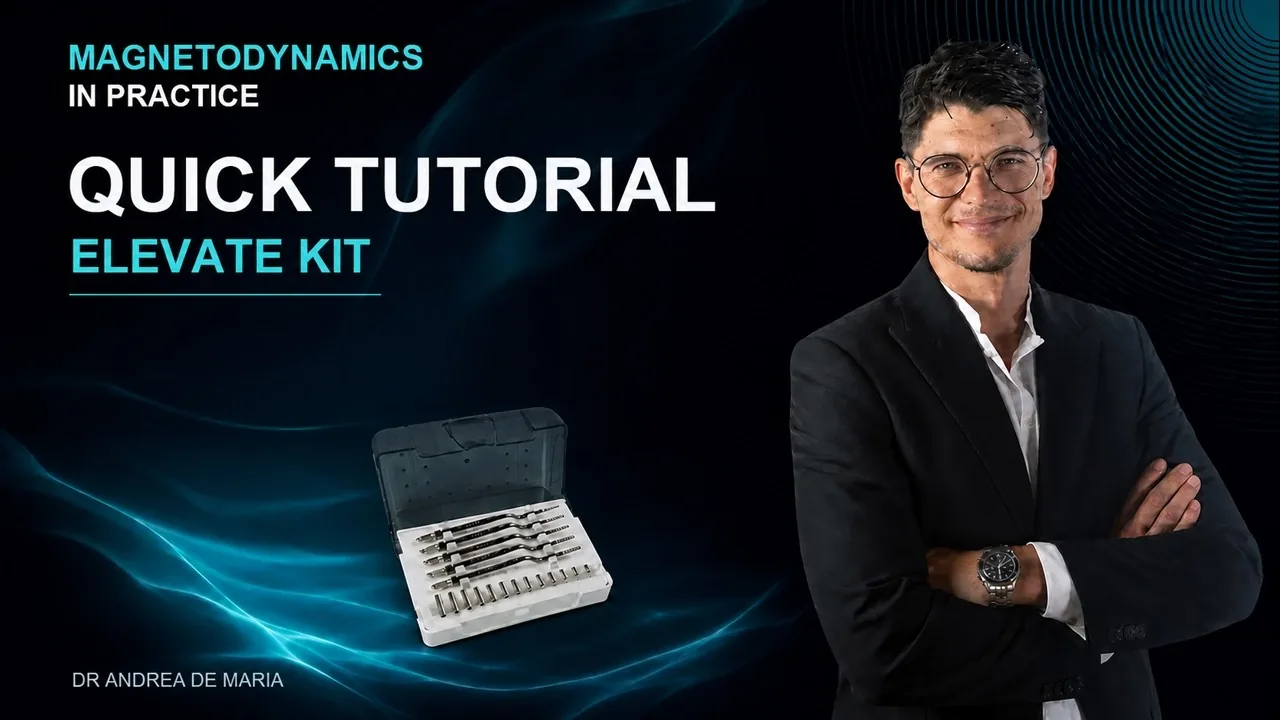
Pairs with Kit Elevate
Black Ruby integrates with the Kit Elevate workflow for crestal sinus floor elevation: progressive bone densification followed by atraumatic membrane lift in a single protocol using MAGNETODYNAMICS.
Bring DLC osseodensification
to your practice
Talk with our specialist to evaluate Black Ruby for your clinical workflow, ask a product question, or pair Black Ruby with Kit Elevate for crestal sinus lift protocols.
For a fast reply, message us on WhatsApp — we usually answer within minutes. Email and form requests may take a little longer.
03 The Surgical Kit · Five osteotomes
Five osteotomes
one progressive sequence
From initial pilot to final preparation — five DLC-coated osteotomes that share the same low-friction surface and the same delivery of impulses generated by MAGNETODYNAMICS technology. Available in Straight (anterior) and Curved (posterior) versions.
Black Ruby 1
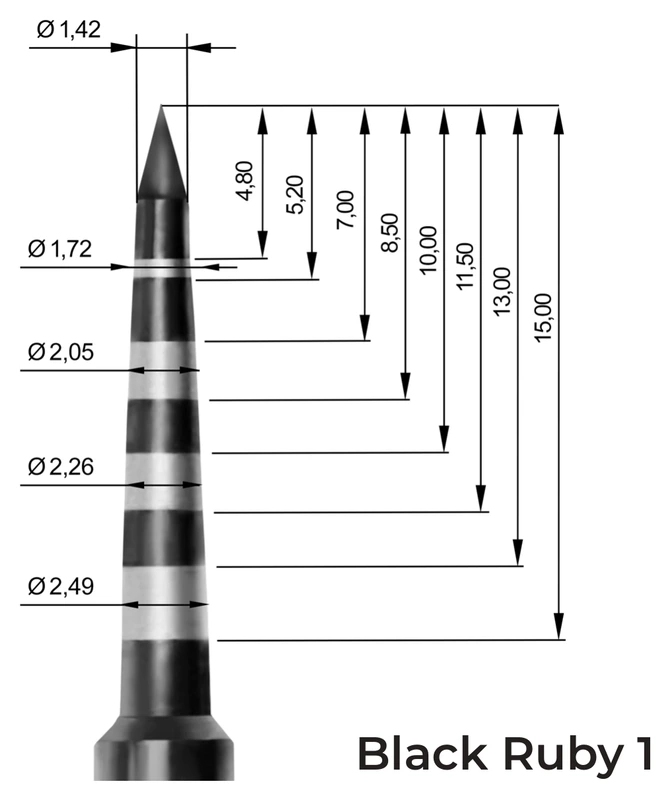
Sets the osteotomy axis with a controlled impulse generated by MAGNETODYNAMICS technology — the foundation for the rest of the sequence.
Black Ruby 2
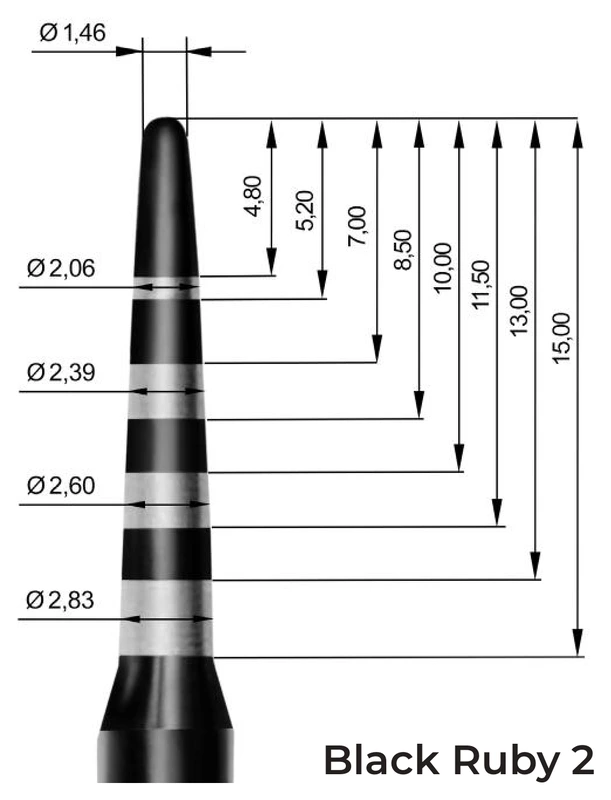
Continues the preparation with the next step in the standard osseodensification protocol — gradual enlargement and densification.
Black Ruby 3
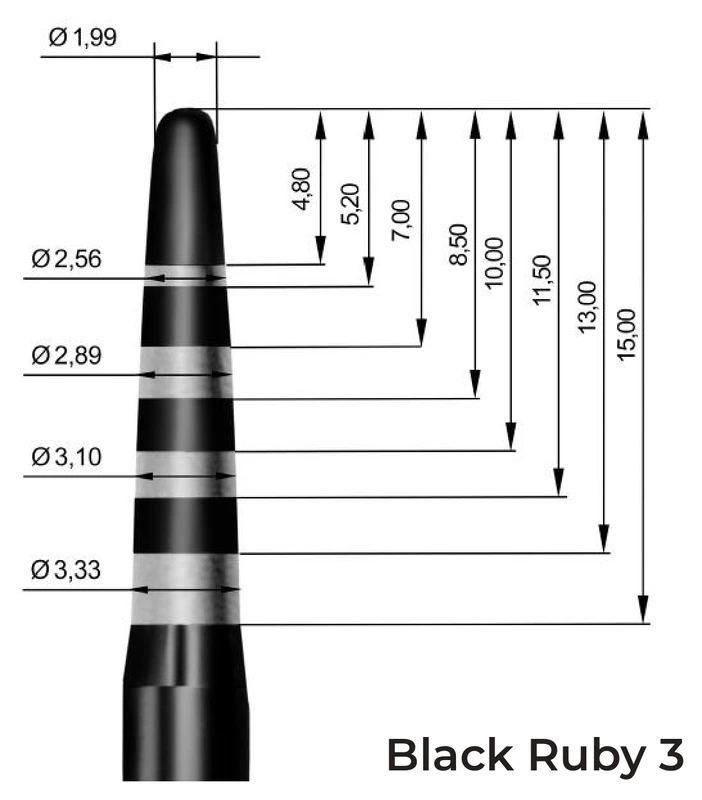
Full-length preparation — DLC coating supports a low-friction advancement through dense bone, compacting cortex without removing it.
Black Ruby 4
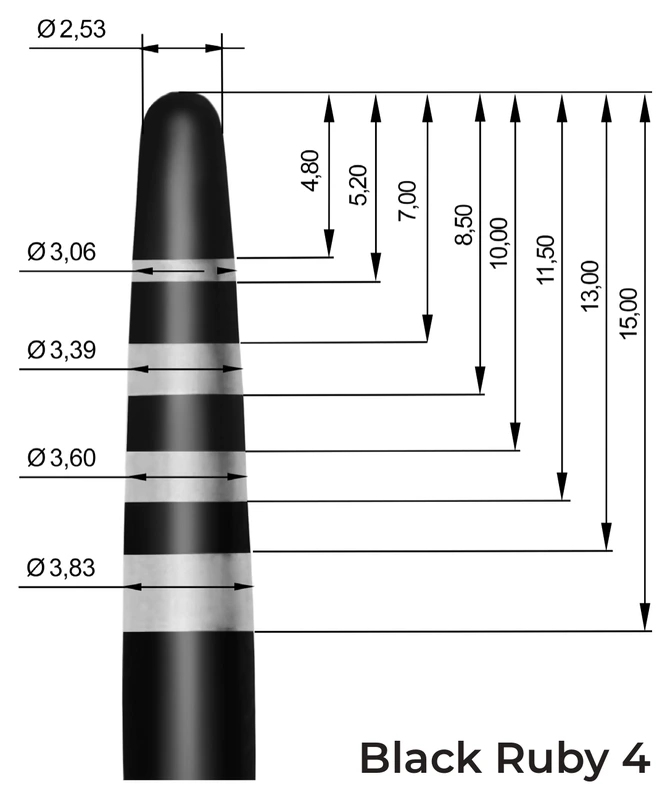
Final shape of the crestal portion of the osteotomy for optimal implant emergence profile.
Black Ruby 5
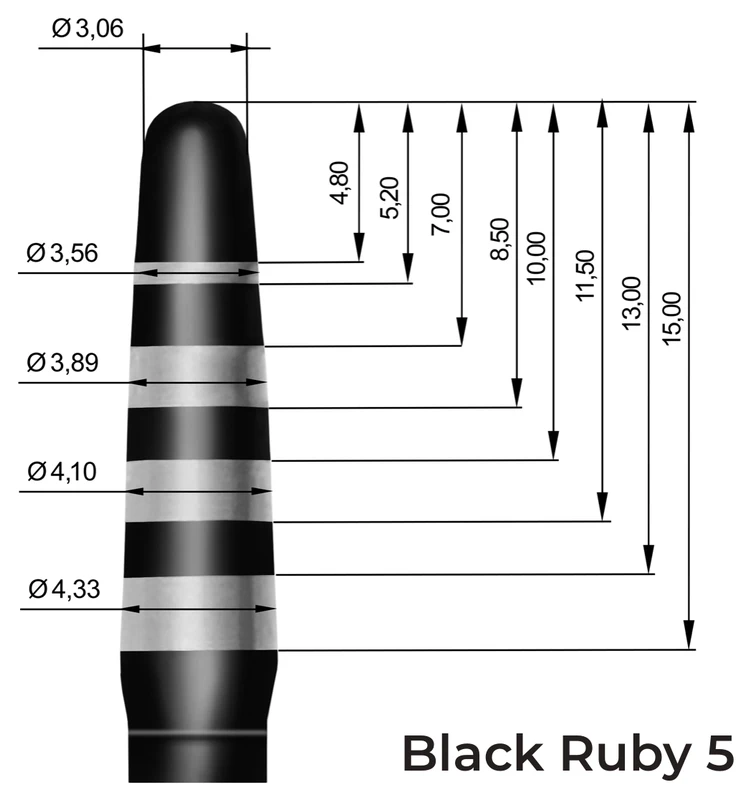
Last osteotome of the sequence when the implant diameter requires an additional preparation step (5 mm+ implants).
Each osteotome is available in Straight (anterior sectors) and Curved (posterior sectors) versions. Laser-etched depth marks at approximately 4.8 mm, 5.2 mm, and 7 mm provide immediate visual reference. Surgical stainless steel with diamond-like carbon (DLC) coating, fully autoclavable. Power levels 1–2 of 4 commonly used; level 3 in selected cases.
Available now Order Black Ruby directly through OSSEOTOUCH LLC — fast nationwide delivery, product information from our team.
Buy online 04 Black Ruby + Kit Elevate
Black Ruby + Kit Elevate
one crestal protocol
Black Ruby and Kit Elevate are designed to work together as a two-step crestal sinus lift workflow — progressive bone densification followed by atraumatic Schneiderian membrane elevation. Same Magnetic Mallet handpiece, same impulse generated by MAGNETODYNAMICS technology, same low-friction principle from start to finish.
STEP 01
Black Ruby
Densify the bone
Five DLC-coated osteotomes (BR1 → BR5) progressively densify the crestal bone toward the sinus floor. The DLC coating glides through dense D2/D3 bone, the impulse generated by MAGNETODYNAMICS technology delivers controlled force, and the peri-implant bone density typically increases.
STEP 02
Kit Elevate
Lift the membrane
Five concave-tipped osteotomes with millimeter-level stops from 1 to 13 mm gently elevate the Schneiderian membrane through hydraulic pressure. No rotary burs, no irrigation in the sinus, no manual mallet strikes.
Order now Add Black Ruby DLC-coated osteotomes to your practice — order through OSSEOTOUCH LLC with fast nationwide delivery.
Buy online 05 Black Ruby at work
Real protocols
real outcomes
A documented step-by-step crestal sinus lift, a clinical case in real practice, and a deep dive into the DLC story — Black Ruby in three different angles, all with the Magnetic Mallet.
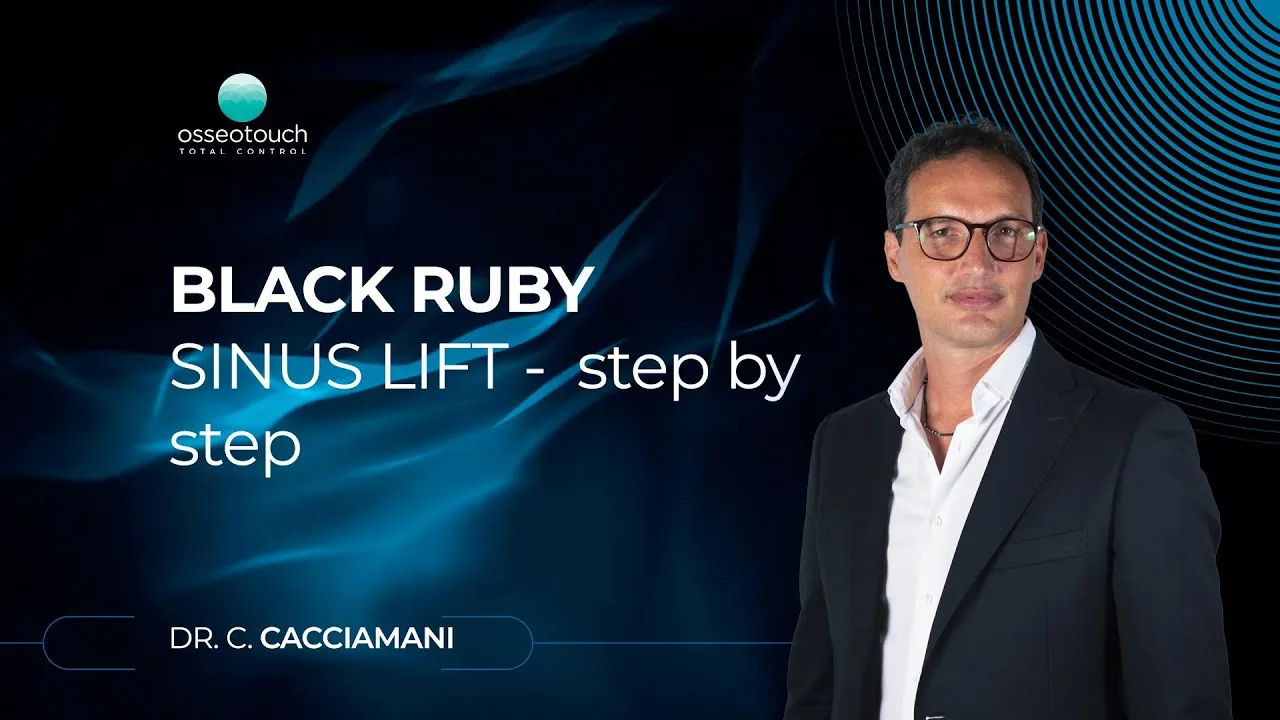 STEP BY STEP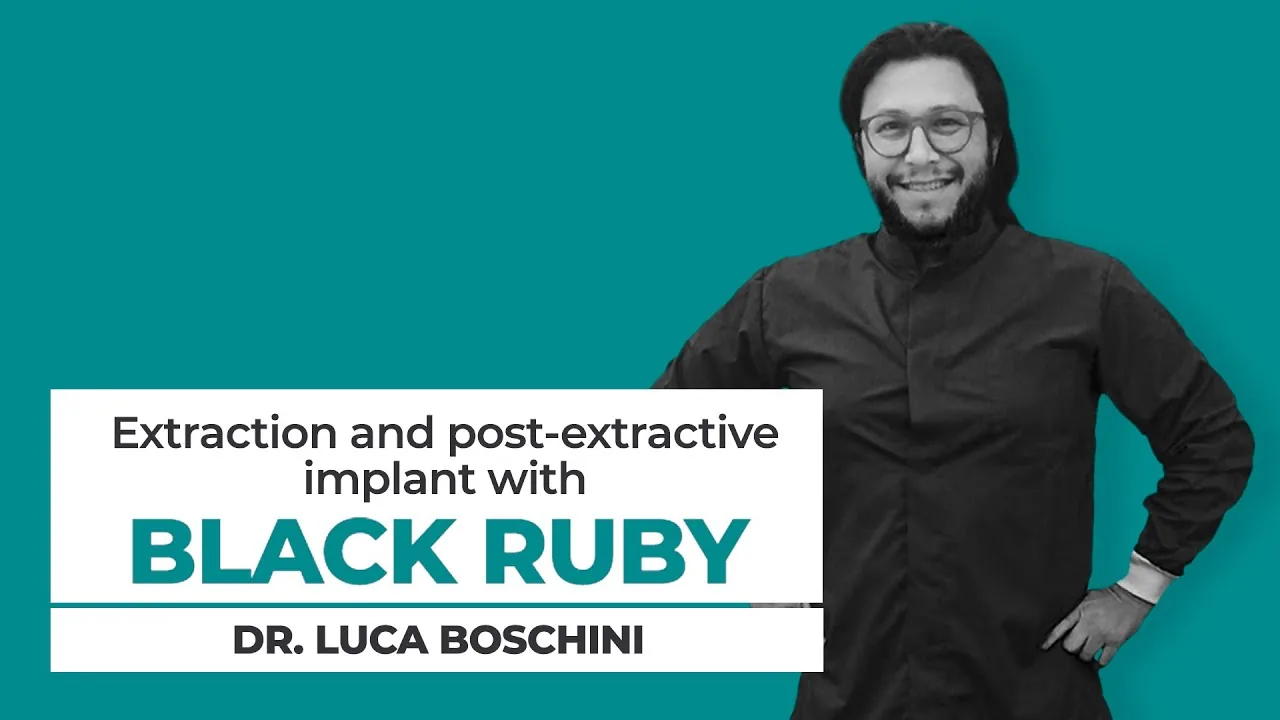
 DEEP DIVE
 06 Biological evidence
Independent evidence
plus four clinical protocols
Magnetic Mallet technology for implant site preparation is supported by peer-reviewed publications and a documented long-term clinical follow-up. Black Ruby extends this evidence base to DLC-coated, low-friction osseodensification across four standard clinical protocols.
~0.1 DLC coefficient of friction
vs ~0.4 stainless steel
(industrial tribology)
vs ~0.4 stainless steel
(industrial tribology)
100% Rotary bur-free
implant site preparation
(standard protocol)
implant site preparation
(standard protocol)
1–2 / 4 Power level used
in 90% of procedures
in 90% of procedures
3–6 mm Crestal sinus lift
routinely achievable
routinely achievable
Peer-reviewed evidence
Pilot animal study Materials 2021
Biomolecular, histological, clinical and radiological analyses of dental implant bone sites prepared using Magnetic Mallet technology
Systematic review J Pers Med 2022
Usefulness of Magnetic Mallet in Oral Surgery and Implantology — A Systematic Review
Clinical follow-up · 10 years OSSEOTOUCH internal
Ten-year clinical study on implants placed with the technique using MAGNETODYNAMICS — long-term predictability of the protocol across more than a decade of clinical use
DLC tribology data is based on industrial measurements applied to surgical instrument coatings. Randomized controlled trials specific to DLC-coated osteotomes are not yet available.
07 Frequently asked questions
Common questions
about Black Ruby
What is Black Ruby and what is it used for?
Black Ruby is a kit of five DLC-coated osteotomes designed for the OSSEOTOUCH Magnetic Mallet. It performs low-friction crestal preparation, osseodensification, rotary bur-free implant site preparation, immediate post-extraction implants, moderate crestal sinus lift (3–6 mm), and split crest expansion of narrow ridges.
What is DLC coating and why does it matter?
DLC stands for diamond-like carbon — an industrial-grade hard coating with a coefficient of friction of approximately 0.1, about a quarter of standard surgical stainless steel. The osteotome glides into cortical and dense bone instead of fighting against it, generating less heat and delivering more predictable tactile feedback to the surgeon.
How does Black Ruby compare to traditional Summers osteotomes?
Summers osteotomes rely on the surgeon striking a manual mallet to advance the instrument — variable force, fatigue-sensitive, auditorily disturbing. Black Ruby works with the Magnetic Mallet impulse: calibrated, constant, operator-independent. The DLC coating reduces friction by approximately 75% compared with uncoated steel.
How does Black Ruby compare to rotary osseodensification burs?
Rotary osseodensification burs perform bone densification through rotary motion at high speed, requiring constant irrigation. Black Ruby achieves bone densification through a percussive impulse generated by MAGNETODYNAMICS technology — no rotation, no irrigation during densification, no rotary handpiece noise. Both share the principle of compacting bone rather than removing it.
What is osseodensification and why is it important?
Osseodensification is a bone preparation technique that compacts bone around the osteotomy site instead of removing it. The crestal cortex is preserved, peri-implant bone density typically increases, and primary implant stability improves. Particularly valuable in soft maxillary bone (D3-D4) and narrow ridges where conventional drilling can compromise primary stability.
Can Black Ruby be used for crestal sinus lift?
Yes. A moderate crestal sinus lift (3–6 mm) is one of the standard Black Ruby protocols. The osteotome creates a greenstick fracture of the sinus floor and the Schneiderian membrane tents over the prepared site. Often possible without biomaterial, using autologous condensed bone and the blood clot. For larger lifts, pair with Kit Elevate.
At what power level should Black Ruby be used?
Power levels 1–2 of 4 are used in approximately 90% of Black Ruby procedures. Higher levels are reserved for particularly dense bone (D1-D2 cortex) or final coronal refinement. The 50-microsecond impulse is below the threshold typically perceived as vibration.
What is the FDA regulatory status of the Magnetic Mallet system?
The OSSEOTOUCH Magnetic Mallet is listed under FDA product code GEY (Class I surgical instrument motor/accessory, 21 CFR 878.4820), 510(k)-exempt and subject to general controls. Black Ruby osteotomes fit new-generation Magnetic Mallet handpieces and are fully autoclavable.
Bring DLC osseodensification
to your practice
Whether you're moving from manual osteotomes, evaluating against rotary osseodensification, or pairing Black Ruby with Kit Elevate for crestal sinus lift, our team will help you choose the right configuration and clarify your questions about the instruments.
Book a clinical call
Pick a date and time. We will contact you to discuss your workflow.
Email our specialists
cs@osseotouch.com
Direct chat with our team.
U.S. ordersBuy online
Order Black Ruby through OSSEOTOUCH LLC — fast nationwide delivery and product information from our team.
Black Ruby is part of the OSSEOTOUCH Magnetic Mallet system, manufactured by Meta Ergonomica S.r.l. (Italy). United States: listed under FDA product code GEY (Class I surgical instrument motor/accessory, 21 CFR 878.4820), 510(k)-exempt and subject to general controls. ISO 13485. Use restricted to qualified dental professionals according to the instructions for use.
More evidence
The studies above concern surgery based on MAGNETODYNAMICS. The full collection is indexed here.
OSSEOTOUCH PEER-TO-PEER
See what your peers are doing with Magnetodynamics
Discover how they use it in clinical practice, what advantages they observe and connect directly with them.
75+ resources