Interviews, clinical cases and scientific studies on surgery based on MAGNETODYNAMICS.
51 articles
·
all on this page
·
no navigating between pages
№ 01
·Article
Removing Implant-Supported Bridges with Efficiency and Control: New Evidence for the Magnetic Mallet
An in vitro study of 210 retrieval tests compared the Magnetic Mallet, a sliding hammer and Coronaflex for implant-supported bridge removal, finding high retrieval effectiveness with temporary cement and generally lower peak forces for the Magnetic Mallet.
Read articleClose
Removing a cement-retained implant-supported bridge requires a careful balance: overcoming cement retention while limiting the forces transmitted to the restoration, abutments and implant screws.
A new in vitro study published in the Journal of Functional Biomaterials compared three systems for retrieving implant-supported bridges: the Magnetic Mallet, a sliding hammer and Coronaflex. Its findings provide new evidence on the retrieval effectiveness and force control achievable with the Magnetic Mallet Crown & Bridge Remover.
210 tests comparing three retrieval techniques
The researchers conducted 210 retrieval tests using seven bridge geometries, two types of cement, three removal tools and five repetitions for each configuration.
The study assessed whether each bridge could be removed within a maximum of 50 impulses and measured the peak force transmitted during the procedure. The full paper is available from the publisher.
High retrieval effectiveness with lower forces
With temporary cement, the Magnetic Mallet achieved a high retrieval rate and performed similarly to the sliding hammer across most of the bridge geometries tested.
The most noteworthy result concerns force. The Magnetic Mallet produced the lowest peak force in nearly all removable configurations. Compared with Coronaflex, it also achieved an equal or higher retrieval rate while generating lower forces.
This matters because successful bridge retrieval is not the only objective. Limiting the mechanical load transferred to prosthetic components is also an important part of a controlled retrieval strategy.
Extremely rapid, precise and repeatable impulses
The Crown & Bridge Remover uses the Magnetic Mallet's MAGNETODYNAMICS technology to deliver extremely rapid, electronically controlled axial impulses.
Instead of relying on a wide manual movement, the clinician can apply short, repeatable impulses and select the power level appropriate for the situation. The study did not compare procedure time in seconds, so it does not establish statistically superior speed. It does show, however, that the system's rapid impulse can be associated, under the tested conditions, with effective retrieval and lower peak forces.
From an operational perspective, this supports a fast, controlled workflow with less dependence on the operator's manual striking force.
Cement selection remains critical
The study also identified an important limitation. With permanent zinc phosphate cement, most bridge configurations could not be removed by any of the three tools. During those attempts, the sliding hammer caused four instances of abutment-screw damage.
This finding reinforces the need to plan cementation with future prosthetic retrievability in mind. When retrieval is a clinical objective, cement selection and bridge geometry are as important as the removal instrument itself.
A practical balance of effectiveness and control
The study does not conclude that the Magnetic Mallet is superior in every situation. In some highly retentive configurations, the sliding hammer achieved a higher retrieval rate, but it also generated higher forces.
The value of the Magnetic Mallet Crown & Bridge Remover lies in the balance between:
high retrieval effectiveness with temporary cement;
generally lower peak forces;
extremely rapid and repeatable impulses;
adjustable power;
greater control of the operative movement.
For particularly retentive structures, the authors suggest that different instruments may be used as complementary tools.
New evidence for more controlled bridge retrieval
This was an in vitro investigation, not a clinical trial, and its results should not be automatically extended to every prosthesis, cement or treatment situation. Nevertheless, it provides strong experimental evidence for an approach that combines retrieval effectiveness, rapid impulse delivery and force control.
The Magnetic Mallet Crown & Bridge Remover is not designed simply to strike harder. It is designed to deliver the required impulse extremely quickly, precisely and under control.
The Importance of the Magnetic Mallet and Fixture Design in Post-Extraction Implantology: An Interview with Dr. Giuliano Garlini and Dr. Marco Redemagni
Discover how surgery based on MAGNETODYNAMICS and implant design can improve implant stability and esthetic outcomes in complex post-extraction situations, with insights from experts Dr. Giuliano Garlini and Dr. Marco Redemagni.
Read articleClose
The Importance of the Magnetic Mallet and Fixture Design in Post-Extraction Implantology
Post-extraction implantology is an increasingly widespread and well-established technique, particularly thanks to the technological innovations that have improved its precision and effectiveness. We interviewed two experts in the field, Dr. Giuliano Garlini and Dr. Marco Redemagni, to discuss how the Magnetic Mallet and fixture design can influence the success of post-extraction implants, especially in complex clinical settings.
1) How important is the minimally invasive nature of the Magnetic Mallet in a post-extraction setting?
Dr. Garlini: “In my daily clinical practice, I place post-extraction implants in 90% of cases. However, in these situations, the amount of available bone is often reduced, and we have to anchor to the inter-radicular bone septa in the posterior sectors or to the palatal cortical bone in the anterior sectors. surgery based on MAGNETODYNAMICS, with its minimally invasive instruments, is essential in these cases. The FIRST tip of the MAGNETODYNAMICS inserts is particularly useful for accurately identifying and defining the entry point of the osteotomes, thus ensuring precise implant placement, even in conditions of poor visibility and limited maneuverability.”
2) What is the ideal fixture design for a post-extraction implant, and what is the most appropriate placement?
Dr. Redemagni: “The ideal design for a post-extraction fixture is conical, with sufficiently aggressive threads to ensure good primary stability, even in post-extraction sites. It is important that the threads extend all the way to the apex of the fixture, allowing easy management of orientation during insertion and enabling possible position adjustments without resorting to the use of drills. As for placement, we always refer to prosthetically guided implantology. The implant must be positioned in correspondence with the tooth being replaced, with a precise three-dimensional orientation, to ensure the trophism of the hard and soft tissues, reducing the risk of remodeling and flattening.”
3) What are the key steps to preserve the residual buccal bone?
Dr. Garlini: “During the extraction, it is essential to avoid fracturing the buccal cortical bone, which is often very thin and delicate. During preparation of the osteotomy, contact with the buccal bone wall must be avoided to prevent damage. Once the implant has been inserted, in order to maintain the shape of the root contour, the alveolus-implant gap can be filled with biomaterial and a connective tissue autograft can be placed between the soft tissues and the bone plate. If the buccal bone plate is damaged or missing, guided bone regeneration (GBR) techniques can be combined with immediate post-extraction implant placement, still providing reliable results.”
4) When and how can prosthetic loading be performed in a post-extraction context?
Dr. Redemagni: “The answer is complex. In general, I perform post-extraction implants with immediate loading in the esthetic zones up to the first premolar. In the latero-posterior sectors, I prefer not to use an immediate prosthesis, opting instead for a wide and tall healing screw, or one modified with resin to give shape to the emergence profile. In any case, it is essential to condition the soft and hard tissues, using xenograft bone grafts or connective tissue grafts, and to ensure a 360° concave emergence profile to provide the right width and biological space around the implant.”
Conclusion
The use of the Magnetic Mallet and an appropriate fixture design are key elements for the success of post-extraction implants, especially in complex clinical situations. Minimally invasive surgery and prosthetically guided planning offer superior results in terms of implant stability and final esthetics, ensuring safe and effective treatments for patients.
№ 03
·Article
Cutting-Edge Technologies and Techniques in Immediate Loading: An Interview with Dr. Garlini and Dr. Redemagni
Discover cutting-edge techniques and the benefits of Conex K implants in immediate loading through an exclusive interview with experts Dr. Garlini and Dr. Redemagni.
Read articleClose
Introduction:
Immediate loading in implantology is increasingly becoming standard practice thanks to technological advances and new surgical techniques. We interviewed Dr. Giuliano Garlini and Dr. Marco Redemagni, experts in the field, to discover their clinical recommendations, the role of innovative technologies such as MAGNETODYNAMICS, and how these influence the success of treatments.
Question 1: What are the main clinical recommendations for immediate loading?
Dr. Garlini: “Immediate loading requires careful patient assessment. It is crucial that the patient is in excellent health, with no systemic or local conditions that could compromise the procedure. A stable occlusion and an ideal antagonist arch are equally important to prevent future complications with the prosthesis. It is also essential to have a sufficient amount of available bone to ensure primary stability of the implant, which must be placed precisely beneath the element to be replaced.”
Question 2: How can MAGNETODYNAMICS osteotomic preparation improve outcomes in immediate loading?
Dr. Redemagni: “The use of the magnetic mallet and the osteotomic inserts allows us to achieve high insertion torque values, which are necessary for immediate loading. This additive technique condenses the bone around the implant rather than removing it, thereby improving peri-implant BIC and allowing the placement of larger-diameter implants, which are crucial to the success of the prosthesis.”
Question 3: What are the safest protocols for immediate loading, and what technologies can support this practice?
Dr. Redemagni: “Distinguishing between immediate loading on single implants and full-arch is fundamental. While implant survival in full-arch rehabilitations is similar to that of implants placed in native bone, single implants show a survival reduction of about 8%. The action of the Magnetic Mallet inserts and the use of Conex K implants, with their high-performance threads, minimize the risk of failure.”
Question 4: How can the design of an implant such as Conex K help in an immediate loading case?
Dr. Garlini: “The design of Conex K is essential for success in immediate loading. Its external geometry and the shape of the threads ensure easy insertion and high primary stability, both crucial elements in these procedures. This type of implant offers a level of safety during use that is fundamental to the success of the treatment.”
Conclusion:
Innovations in the field of immediate loading are transforming implantology, making treatments safer and more effective. Thanks to experts such as Dr. Garlini and Dr. Redemagni and the use of advanced technologies like MAGNETODYNAMICS and Conex K implants, patients can expect optimal outcomes with reduced recovery times.
№ 04
·Article
Innovative Results: The Magnetic Mallet Redefines Dental Implantology
Discover the groundbreaking results of new scientific research on the effectiveness of the Magnetic Mallet compared to conventional drill-based methods in implant site preparation. Greater accuracy, less bone loss, and reduced surgical trauma are just some of the benefits highlighted by the study.
Read articleClose
A new scientific paper has been published exploring the effectiveness of the Magnetic Mallet compared to conventional drill-based methods in implant site preparation. This innovative study, conducted by the Department of Surgical Sciences at the University of Genoa, highlighted notable results in three key aspects of site preparation: accuracy, bone loss, and temperature variation.
Paper Title: “Influence of dental implant site preparation method on three aspects of the site: magnetodynamic mallet versus conventional drill”.
Paper Highlights:
Preparation Accuracy: The Magnetic Mallet showed significantly greater precision compared to conventional drill-based methods.
Bone Loss: Less bone loss was observed with the use of the Magnetic Mallet.
Temperature Variation: The Magnetic Mallet generated fewer temperature variations, reducing the risk of bone necrosis.
These results suggest that the use of the Magnetic Mallet can improve primary implant stability and reduce surgical trauma, offering an effective and safe alternative to traditional methods.
Interview with Prof. Domenico Baldi
We had the opportunity to speak with Prof. Domenico Baldi, one of the authors of the paper, to discuss the results and the clinical implications of the study.
Q: Prof. Baldi, what inspired this comparative study between the Magnetic Mallet and conventional drill-based methods? A: The inspiration came from the desire to find less invasive and more effective methods for implant site preparation. With the increasing use of dental implants, it is essential to develop techniques that reduce bone trauma and improve implant stability.
Q: What were the most notable results of the study? A: The most notable result was the accuracy of the Magnetic Mallet. The precision of site preparation was significantly higher, which suggests a better fit of the implant and, consequently, improved primary stability.
Q: What are the clinical implications of these results? A: The results suggest that adopting the Magnetic Mallet could improve primary implant stability and reduce surgical trauma. To these results I would add what emerged from the research I conducted together with Prof. Schierano Gianmario of the University of Turin (Biomolecular, Histological, Clinical, and Radiological Analyses of Dental Implant Bone Sites Prepared Using Magnetic Mallet Technology: A Pilot Study in Animals – G. Schierano, D. Baldi, B. Peirone, M. Mauthe von Degerfeld, R. Navone, A. Bragoni, J. Colombo, R. Autelli, G. Muzio – Materials 2021, 14(22), 6945), namely that using the Magnetic Mallet in implant site preparation produces a better and faster biological response, and therefore improved secondary stability. This could lead to a significant change in clinical practice, making implant site preparation safer and more effective, since with the same instrument we are able to increase both primary and secondary stability.
Q: Are there any further studies planned on this topic? A: Yes, additional research is planned to examine the effects of the Magnetic Mallet in vivo and with larger samples to confirm the results obtained in the laboratory.
Guided Surgery with MAGNETODYNAMICS technology: A Case Study
In our latest blog post, discover an enlightening case study of guided surgery performed with MAGNETODYNAMICS technology, presented by Dr. Andrea De Maria. Using articaine 1:100,000, Dr. De Maria addressed a coronal fracture of the upper left incisor, using the dedicated Magnetic Mallet inserts and an Osseotouch Conex-k 3.75*11.5mm implant. This…
Read articleClose
In our latest blog post, discover an enlightening case study of guided surgery performed with MAGNETODYNAMICS technology, presented by Dr. Andrea De Maria. Using articaine 1:100,000, Dr. De Maria addressed a coronal fracture of the upper left incisor, using the dedicated Magnetic Mallet inserts and an Osseotouch Conex-k 3.75*11.5mm implant. This study demonstrates the effectiveness of MAGNETODYNAMICS technology in implant surgery, offering precise and conservative solutions.
The Case:
A female patient, ASA 1, presented at the clinic with a coronal fracture of the upper left incisor, previously treated with endodontic therapy and a cast metal post reconstruction due to secondary caries.
In the video, Dr. De Maria meticulously walks us through every step of the procedure: from the administration of articaine 1:100,000, to sectioning of the ligament fibers and extraction using the dedicated Magnetic Mallet inserts.
Implant Planning and Placement:
After extraction, Dr. De Maria outlines the prosthetic plan, which involves placement of an Osseotouch Conex-k 3.75*11.5mm implant and delivery of an immediately loaded screw-retained provisional crown.
The surgical phase includes creation of the implant tunnel using the inserts of the Dynamic Guided guided-surgery kit, ensuring precision and conservation in the position of the implant fixture.
Tissue Augmentation and Finalization:
Dr. De Maria also demonstrates the augmentation of the buccal soft tissues and the delivery of the provisional crown to guide tissue healing.
A Successful Outcome:
This case study demonstrates the effectiveness of guided surgery with MAGNETODYNAMICS technology, providing precise and conservative solutions for dental implant procedures.
We extend our gratitude to Dr. De Maria for sharing this exemplary case and highlighting the use of our Osseotouch implants, the Magnetic Mallet, and the Dynamic Guided guided-surgery kit.
For more clinical cases and informational videos, we invite you to visit our YouTube channel!
Stay tuned for more informational content and innovative solutions from Osseotouch!
№ 06
·Article
Exploring the New Frontiers of Dental Implantology: The Magnetic Mallet Study
Recently, a team of clinicians, including Gabriele Cervino, Luca Fiorillo, Nicola Scotti, Francesco Alessandro Motta, Francesco Maria Motta, Jacopo Colombo, Artak Heboyan, and Domenico Baldi, published a groundbreaking study exploring the role of the Magnetic Mallet (MM) in guided surgery for full-arch restoration with narrow and tilted implants. Discovery of the Magnetic…
Read articleClose
Recently, a team of clinicians, including Gabriele Cervino, Luca Fiorillo, Nicola Scotti, Francesco Alessandro Motta, Francesco Maria Motta, Jacopo Colombo, Artak Heboyan, and Domenico Baldi, published a groundbreaking study exploring the role of the Magnetic Mallet (MM) in guided surgery for full-arch restoration with narrow and tilted implants.
Discovery of the Magnetic Mallet: A Step Forward in Implantology
The Magnetic Mallet, an instrument based on MAGNETODYNAMICS, has opened new pathways in the field of dental implantology. The study aimed to evaluate and compare postoperative discomfort and healing outcomes among the use of the MM, piezosurgery, and conventional instruments after tooth extraction. The research was conducted on a 69-year-old patient who required a fixed rehabilitation to replace complete removable dentures.
A Revolutionary Method for Exceptional Results
Through the use of cone-beam computed tomography, the team of clinicians identified an ideal patient for the treatment, characterized by significant bone resorption. Their treatment plan included the immediate loading of six implants in the upper arch, with guided surgery meticulously planned in coordination with the new prostheses. Using the Magnetic Mallet, six narrow implants were placed, followed by the construction of a reinforced metal-supported prosthesis.
Promises of Innovation and Success
After six months, the final rehabilitation was successfully completed. Narrow implants emerge as a promising option for full-arch fixed rehabilitations, demonstrating the effectiveness of guided surgery and the Magnetic Mallet in ensuring optimal results. However, despite the encouraging findings, the medical team emphasizes the importance of further research to confirm these results on a larger scale.
Read the Full Article to Learn More
If you are interested in discovering further details about this groundbreaking study, we invite you to read the full article here: [Read the full paper]. Discover how the Magnetic Mallet and guided surgery are transforming the landscape of dental implantology and opening new opportunities for better outcomes and satisfied patients. Don’t miss the chance to stay up to date on the latest discoveries in the field of dentistry!
№ 07
·Article
Revolutionizing Dental Surgery: An Exclusive Interview with Dr. Luigi Tagliatesta on the Innovative Use of the Magnetic Mallet in Dental Autotransplantation
Welcome to our blog dedicated to innovation in the field of dentistry! Today we are excited to present an exclusive interview with the renowned dental surgeon Dr. Luigi Tagliatesta, an expert in the use of the Magnetic Mallet in dental autotransplantation. Through this conversation we will explore the crucial aspects of this advanced technique and discover how the Magnetic Mallet is revolutionizing dental surgery….
Read articleClose
Welcome to our blog dedicated to innovation in the field of dentistry! Today we are excited to present an exclusive interview with the renowned dental surgeon Dr. Luigi Tagliatesta, an expert in the use of the Magnetic Mallet in dental autotransplantation. Through this conversation we will explore the crucial aspects of this advanced technique and discover how the Magnetic Mallet is revolutionizing dental surgery.
Team Osseotouch: Good morning, Doctor. We are familiar with many of the positive aspects of the Magnetic Mallet that have been addressed in this field: from extraction surgery to implant surgery and even prosthetic use. Today, however, we would like to discuss with you a rather particular use of our device that you have been working on. Can you give us a preview?
Dr. Luigi Tagliatesta: Good morning, and thank you for this question, because it gives me the opportunity to address a topic very dear to me but often underestimated, namely dental autotransplantation.
Team Osseotouch: In what way does the Magnetic Mallet fit into this scenario?
Dr. Luigi Tagliatesta: The Magnetic Mallet, thanks to its high-intensity impact force combined with the very short duration of the pulse, allows for the plastic deformation of bone. This makes it possible to perform a highly precise and atraumatic extraction of compromised dental elements, thus avoiding involvement of the cortical bone of the post-extraction sockets.
Team Osseotouch: Why is this characteristic important for the surgery of autotransplantation?
Dr. Luigi Tagliatesta: Because one of the keys to the success of transplanted elements is an intact recipient socket and the ability to extract the compromised element quickly while at the same time respecting the alveolar anatomy. On the contrary, the characteristics of the extraction inserts do not allow the same preservation of the periodontal ligament in the donor teeth. For this reason, the use of the Magnetic Mallet for the extractive component is limited to the extraction of compromised teeth, and not to donor teeth.
Team Osseotouch: Are there other aspects that can be addressed with the Magnetic Mallet to finalize the technique?
Dr. Luigi Tagliatesta: Certainly! As mentioned earlier, one of the most complex aspects of this technique is the adaptation of the post-extraction socket of the recipient element to the anatomy of the donor element. Such adaptation can be performed using surgical drills, ultrasonic devices, or manually with bone rongeurs. However, by using the Magnetic Mallet with custom-made inserts, produced on the basis of the DICOM files from the CT scan, anatomies can be replicated that mimic the root anatomy of the donor tooth. In this way, taking advantage of the bone-modeling characteristics of the Mallet, combined with the precision of the insert, it is possible to perform alveolar osteoplasties extremely faithful to the anatomy of the donor tooth in rapid and precise times. This allows for a better prognosis in bone healing and therefore greater success in the “integration” of the transplanted dental element.
Team Osseotouch: Can you show us an example to better understand what you are talking about?
Dr. Luigi Tagliatesta: Certainly. Below you can see a brief summary of a surgical procedure I performed that illustrates the osteoplasty. Thanks to the Magnetic Mallet model, I prepare the recipient socket so that it is ready to receive the new dental element.
Team Osseotouch: Thank you, Doctor, now it is much clearer. What do you recommend for those who would like to explore this topic in greater depth?
Dr. Luigi Tagliatesta: Only for subscribers to the Osseotouch channel, and through the end of January 2024, there is the possibility of purchasing the entire Osteocom course at a special discount. Here you can explore in depth all the theoretical and practical aspects of this technique, including the realization of the customized tip. Thanks to the presence of numerous surgical videos, where I illustrate all the steps step by step, anyone will be able to perform the procedure correctly from start to finish in a simple and independent way.
Team Osseotouch: We would also like to mention our colleague Dr. Luca Boschini, who works in the field of dental autotransplantation using the Magnetic Mallet. He has contributed significantly to the development of this technique.
Dr. Luigi Tagliatesta: Absolutely, I would like to thank Dr. Luca Boschini for his valuable contribution to this field. His experience and dedication are of great value to the advancement of dental autotransplantation surgery using the Magnetic Mallet.
*The discount coupon is automatically activated by clicking exclusively on the link provided on this page and adding the course to the cart from the Osteocom page. The discount will be visible before proceeding with the purchase.
№ 08
·Article
Minimally Invasive Surgery: A Guided Case in Collaboration with Dental Technology
In the world of implant surgery, every case is unique and presents challenges that require expertise and cutting-edge technology. Let's take a closer look at an intriguing clinical case led by an expert in the field, Dr. Luigi Tagliatesta, with a particular focus on the collaboration with Dental Technology. Discover how this synergy led to the success of a…
Read articleClose
In the world of implant surgery, every case is unique and presents challenges that require expertise and cutting-edge technology. Let’s take a closer look at an intriguing clinical case led by an expert in the field, Dr. Luigi Tagliatesta, with a particular focus on the collaboration with Dental Technology. Discover how this synergy led to the success of a minimally invasive surgery.
Question 1: How did you address the resorbed and complex post-extraction ridges in this particular case, Dr. Tagliatesta?
Dr. Tagliatesta: In this specific case, we used a guided-design software, Real Guide™, which allowed us to address the resorbed post-extraction ridges in a precise and safe way, minimizing surgical risk.
Question 2: What was the role of MAGNETODYNAMICS technology and the macro-structure of the Conex – K implants in achieving primary stability?
Dr. Tagliatesta: The combination of MAGNETODYNAMICS technology and the macro-structure of the Conex – K implants is essential to achieve optimal primary stability in any bone situation, leveraging the bone compaction obtained by the dedicated inserts.
Question 3: Why did you choose the guided approach over an open approach for implant placement?
Dr. Tagliatesta: By carefully studying the CT cross-sections, I identified the only possible position for placing the implants entirely in native bone. The use of guided surgery allowed us to expand the limited residual bone and place the implants in a flapless manner.
Question 4: How did you manage the prosthetic emergence in this specific case?
Dr. Tagliatesta: In the final restoration, it will be possible to correct the prosthetic emergence with an angled abutment or by using a multi-unit screw, anticipated by proper planning that allowed us to match the STL scans with the DICOM files of the CT scan.
Additional Question for Dental Technology: What was the role of Dental Technology in the production of the surgical guides and the digital planning of this case?
Dental Technology played a key role in the production of the surgical guides and the digital planning of this case, providing essential guidance for the planning and execution of the procedure.
№ 09
·Article
Case Study with Dr. Andrea De Maria Using the Kit Dynamic Guided
We are excited to share a new clinical case performed by Dr. Andrea De Maria, using the revolutionary Kit Dynamic Guided by Osseotouch! 🦷💡 The Case: Implant placement of teeth 26 and 27 by means of guided osteotomic surgery with Dynamic Guided, followed by sinus lift, condensation, and connective tissue graft. Author: Dr. Andrea De Maria – Expert in…
Read articleClose
We are excited to share a new clinical case performed by Dr. Andrea De Maria, using the revolutionary Kit Dynamic Guided by Osseotouch! 🦷💡
The Case: Implant placement of teeth 26 and 27 by means of guided osteotomic surgery with Dynamic Guided, followed by sinus lift, condensation, and connective tissue graft.
Author: Dr. Andrea De Maria – Expert in Advanced Implantology and Oral Surgery.
Kit Dynamic Guided Osseotouch: The Kit Dynamic Guided is designed to offer maximum freedom to the clinician, ensuring a simple and protocol-based workflow. This cutting-edge kit allows the professional to choose preparation with osteotomes for MAGNETODYNAMICS without resective bone reduction, fully respecting the anatomy.
Main Features:
Maximum functionality and convenience
Complete trousse divided into two easily accessible compartments
This kit is designed to optimize the professional’s experience, providing high-precision instruments and enabling a more efficient procedure.
Here is what the KIT consists of:
Discover more about our innovative range of products and deepen your knowledge of guided surgery and advanced implantology by contacting us by email.
👉 Do you have questions for Dr. Andrea De Maria? Leave a comment below to share your opinion or ask Dr. De Maria direct questions.
Join the conversation, be part of the Osseotouch community!
№ 10
·Article
The Mallet Even More Precise, Increasingly Unique: Kit Dynamic Guided
Osseotouch enhances guided surgery with new advantages previously thought impossible: zero bone subtraction, cold surgery (zero heat – zero irrigation), expansion and condensation of bone tissue. What you will find in the kit The kit consists of 5 osteotomes, 5 millimetric stops, 1 screwdriver, 2 mounters, and 2 drivers. Through the planning software…
Read articleClose
Osseotouch enhances guided surgery with new advantages previously thought impossible: zero bone subtraction, cold surgery (zero heat – zero irrigation), expansion and condensation of bone tissue.
What you will find in the kit
The kit consists of 5 osteotomes, 5 millimetric stops, 1 screwdriver, 2 mounters, and 2 drivers. Through the Real Guide™ planning software, it offers numerous advantages that simplify the workflow, improving surgical precision and saving valuable time.
Guided planning
Guided planning has become a fundamental practice in modern dental surgery, allowing dentists to achieve safer and more predictable results. The Kit Dynamic Guided takes full advantage of this methodology, combining the reliability of the Real Guide™ application, the most widely used in the world for 3D diagnostics, with the power of MAGNETODYNAMICS technology.
MAGNETODYNAMICS in service of guided surgery
MAGNETODYNAMICS technology has brought a wave of innovation to the field of guided surgery, revolutionizing the way dental procedures are performed.
Speed, versatility, and improved visibility are just some of the advantages offered by the Magnetic Mallet which, combined with the capabilities of guided surgery, allow every phase of the procedure to be optimized, from planning, to the production of the surgical guide, through to the surgical execution.
This translates into significant time savings and greater surgical precision, offering patients better outcomes and faster healing.
Affordable cost
The kit will significantly increase the value of the Magnetic Mallet in your practice, and you can equip yourself with it in various configurations starting at 1,100 euros + VAT.
Let’s talk about it!
Contact us for a complete presentation of the kit, how you can use it, and to learn about the partners that Osseotouch makes available for full-scope planning and execution of the case.
№ 11
·Article
Sinus lift with Elevate! Step by step – Dr. A. Venturini
In the field of dental implantology, the management of complex cases requires a focused approach and accurate planning in order to achieve optimal results. The clinical case presented by Dr. Venturini gives us the opportunity to examine a surgical procedure that required particular attention from preparation of the implant site, to bone grafting, all the way to elevation of the membrane…
Read articleClose
In the field of dental implantology, the management of complex cases requires a focused approach and accurate planning in order to achieve optimal results. The clinical case presented by Dr. Venturini gives us the opportunity to examine a surgical procedure that required particular attention from preparation of the implant site, to bone grafting, all the way to elevation of the sinus membrane.
Initial situation before and after extraction
Step 1: Preoperative planning and bone healing
The patient underwent extraction of tooth 16 due to advanced caries. After a waiting period of approximately two months to allow for bone healing, a Cone-Beam Computed Tomography (CBCT scan) was performed, which revealed an amount of residual bone of approximately 1.8 mm mesial to tooth 17 and approximately 4.8 mm distal to tooth 15.
CBCT scan
Step 2: Surgical approach
Dr. Venturini opted for a surgical approach that included a full-thickness crestal flap. Implant site preparation was carried out with care, using drills of progressively increasing diameter up to a diameter of 3.5 mm. This preliminary step was crucial to ensure a stable foundation for implant placement.
X-ray 2 months after the CT scan
Step 3: Sinus membrane elevation
The most interesting aspect of this case is the elevation of the sinus membrane. After preparing a site of adequate diameter, by means of the Magnetic Mallet, Dr. Venturini used Elevate osteotomes with a 3 mm stop and, in the final phase, with a 4 mm stop for the elevation. The use of fragments of fibrin sponges, as in the Condress case, for the management of fractures of the bone wall of the maxillary sinus was a crucial step to ensure proper elevation.
Implant placement and crestal sinus lift with Elevate
Step 4: Implant placement and stability
Once sufficient elevation was achieved, it was possible to proceed with the placement of an implant measuring 4.5 x 8 mm. However, it is interesting to note that the implant showed limited primary retention, rotating during the screwing-in process. This led to the decision to opt for a submerged implant approach and a re-entry uncovering at 6 months.
X-ray after 15 days
Step 5: Stability assessment and prosthetic phase
During the uncovering phase, stability was assessed with a torque ratchet wrench, resulting greater than 30 Newtons and therefore satisfactory to proceed with the placement of the healing screw. The next phase involves prosthetic restoration, which will be planned two months after the uncovering phase.
Conclusions
The clinical case presented by Dr. Venturini illustrates a series of challenges faced in the field of dental implantology. Accurate planning, bone grafting, and elevation of the sinus membrane were crucial elements for the success of the procedure, in which Elevate, the definitive kit for crestal sinus lift, took center stage.
This case underscores the importance of thorough assessment and careful planning in complex clinical situations to achieve lasting and satisfying results for the patient. Magnetic Mallet once again proves to be an excellent ally in this type of challenge.
№ 12
·Article
They're talking about us: surgery based on MAGNETODYNAMICS as the gold standard for implant site preparation in ceramic implants
What is the most effective strategy for performing implant site preparation accurately and safely? Dr. Franco Giancola, a specialist in ceramic implantology and guided regenerative surgery, addressed this question in an article published in Ceramic Implants.
Read articleClose
What is the most effective strategy for performing implant site preparation in a precise and safe manner?
Dr. Franco Giancola, a specialist in ceramic implantology and guided regenerative surgery, addressed this question.
In an article published in Ceramic Implants, an international journal of ceramic implant technology, the surgeon explains how preparation with Magnetic Mallet and all its related instruments represents the gold standard for facilitated and safe implant placement.
As every expert in the field knows, achieving good implant osseointegration requires proper site preparation to ensure adequate immediate mechanical retention and stable biological integration
over time.
In addition to traditional techniques, today it is possible to prepare the implant site using surgery based on MAGNETODYNAMICS and the Magnetic Mallet, which allows the clinician to expand the alveolar ridge without the use of water jets and without removing bone tissue.
As Dr. Giancola reports in the article, surgery based on MAGNETODYNAMICS offers several advantages:
The force applied to the inserts is high and brief; therefore, the procedure is faster and more precise.
The handpiece is operated with one hand and the movement is purely longitudinal; this provides better operative control and reduces operative risk.
The absence of rotary instruments and irrigation enables cold surgery, eliminating the risk of tissue overheating and infection.
The article continues by presenting the surgical protocol followed and the clinical cases most useful for the reader's understanding: the patients reported differ from one another in age and initial baseline condition, but all share implant site preparation based on MAGNETODYNAMICS and the placement of ceramic implants.
The aim of this article is to demonstrate an alternative method for placing zirconia implants in poor-quality bone. In the cases reported, the implant sites were prepared using osteotomes for MAGNETODYNAMICS, which compressed the native bone, together with cortical sinus floor elevation, as reported in the literature.
Site preparation with Magnetic Mallet once again proves to be the best solution for resolving challenging implant placement cases: it increases the bone-to-implant ratio in the initial placement phase, improving primary implant stability and accelerating bone healing.
If you would like to read the full article, click here
№ 13
·Article
The new Osseotouch Implant Line is now available: the right instrument, in the right hands
Born from the desire to improve and offer a complete 360° service, we designed the new Osseotouch implants to provide the most suitable solution for our community's needs, giving clinicians the freedom to choose the best implant type for each case.
Read articleClose
Born from the desire to improve ourselves and offer a complete 360° service, we designed the new Osseotouch implants with the aim of providing the most suitable solution for our community's needs, giving clinicians the freedom to choose the best implant type for each case.
What is it about?
Conex-K and Only One are the two Osseotouch implants that combine modern implantology with a surgical technique based on MAGNETODYNAMICS. The new implant line offers a complete range of prosthetic components and surgical instruments capable of providing multiple alternatives for different clinical situations and ensuring proper rehabilitative treatment.
Conex-K is designed to deliver stability and reliability across all clinical procedures:
Excellent long-term tissue stability
Perfect internal seal that prevents infiltration
Improved distribution of lateral loads within the implant
No abutment mobility after prosthetic loading
Only One is the single-stage implant with integrated MUA, designed to offer innovative solutions in immediate loading treatments, with no direct abutment connection that eliminates the risk of bacterial infiltration. Made from a single piece, it ensures improved prosthetic stability, particularly with screw-retained restorations under immediate loading.
On the dedicated page, you can access the CAD/CAM digital libraries to explore in detail all the features of Osseotouch implants.
Surgical kit for a streamlined workflow
We designed an organized kit that gives the clinician maximum freedom. The idea was to make the workflow as simple and standardized as possible.
Maximum functionality and practicality await you in a complete tray divided into two easily accessible compartments: choosing between preparation with osteotomes for MAGNETODYNAMICS (without bone reduction) or with rotary burs has never been easier.
Year-end message from our Osseotouch CEOs. Looking ahead to 2023
2022 was a very intense and fruitful year, marking an important milestone in the growth journey Osseotouch has been pursuing over the years. First and foremost, we extend heartfelt thanks to our long-standing customers who maintained a collaborative spirit this year as well.
Read articleClose
2022 was a very intense and fruitful year, marking an important milestone in the growth journey that Osseotouch has been pursuing over the years.
First and foremost, we extend heartfelt thanks to our long-standing customers who maintained a collaborative spirit this year as well. We must also welcome the customers acquired this year, who allowed us to reach our set goals.
The year just passed was particularly positive for Osseotouch: in a general context of economic difficulty and unfavorable trends in many markets, we managed to achieve solid results, confirming the growth trend of recent years. The milestones reached over the past year encourage us to remain confident about the objectives of our growth strategy.
In this regard, in 2022 we laid the foundations for development in new geographic areas: we strengthened our global presence through the opening of new branches in Spain and the USA and through our first MDR certification for medical devices, enabling Osseotouch devices to be distributed worldwide in full compliance with regulations.
Throughout this year, we appreciated, never taking it for granted, the values demonstrated daily by our customers, suppliers, and collaborators, and this is why we are convinced that in 2023 we will have ample room for improvement and a bright future. Finally, we thank the Osseotouch team for the dedication and commitment shown in daily activities, which has allowed us to achieve our goals.
Warm wishes for the year to come.
Claudio De Giglio & Manuel Scali
CEO Osseotouch
№ 15
·Article
Advanced procedures in implantology based on MAGNETODYNAMICS with Dr. Luca Boschini
On Thursday, December 22, Dr. Luca Boschini delivered a webinar on surgery based on MAGNETODYNAMICS in English, broadcast live from Riyadh, Saudi Arabia. During the webinar, Dr. Luca Boschini examined in detail advanced minimally invasive implantology procedures based on MAGNETODYNAMICS through multiple clinical cases with Magnetic Mallet.
Read articleClose
On Thursday, December 22, Dr. Luca Boschini delivered a webinar on surgery based on MAGNETODYNAMICS in English, broadcast live from Riyadh, Saudi Arabia!
During the webinar, Dr. Luca Boschini examined in detail advanced minimally invasive implantology procedures based on MAGNETODYNAMICS through the presentation of multiple clinical cases using Magnetic Mallet.
The webinar is now available on demand both on our Facebook page and on our YouTube channel.
This Christmas, treat yourself to a gift with Osseotouch
Christmas is not only an opportunity to spend days of serenity, joy, and peace with family, but also a moment to reward the dedication and commitment poured into one's work, by treating oneself to a gift. That's why we at Osseotouch have selected the best gift ideas to enjoy this Christmas.
Read articleClose
Christmas is not only an opportunity to spend days of serenity, joy, and peace with family, but also a moment to reward the dedication and commitment poured into one's work, by treating oneself to a gift. That's why we at Osseotouch have selected the best gift ideas to enjoy this Christmas.
Elevate
Elevate is the definitive kit for crestal sinus lift procedures. It combines the classic sinus lift technique with the advantages of MAGNETODYNAMICS technology, offering a unique solution for sinus lift procedures. Elevate uses 100% of the bone, leveraging shaping toward the sinus, and operates in complete safety thanks to its millimetric stops.
Levacorone is the handpiece that harnesses the power and control of MAGNETODYNAMICS technology to deliver a perfectly longitudinal traction that allows bridges and crowns to be removed in extremely short time. It includes 3 instruments to remove any element.
Genoa is the least invasive and safest way to manage thin ridges. The tip of the Genoa instruments engages the bone ridges perfectly: the longer part determines direction, while the shorter part ensures continuity.
Black Ruby is the latest-generation osteotome with a diamond-like carbon coating: it glides into the bone, shaping, expanding, and condensing. Its DLC coating reduces the friction factor between osteotome and bone in a remarkably perceptible way.
With First, determining the osteotomy axis becomes much simpler, even in the presence of thin ridges, since the osteotomy trajectory is maintained safely and predictably. The instrument's lanceolate tip allows the clinician to manage even the most prominent cortical bone, completely avoiding the use of burs.
All Osseotouch products are available in the general surgery catalog and can be purchased directly from our shop page.
№ 17
·Article
An in-depth look: interview with Dr. Andrea De Maria
Following the excellent response to the clinical case and tutorial by Dr. Andrea De Maria, we recorded a Q&A interview in which Dr. De Maria answered the five most frequently asked questions. Here's a brief excerpt for you.
Read articleClose
Following the excellent response to the clinical case and tutorial by Dr. Andrea De Maria, we recorded a Q&A interview in which Dr. De Maria answered the five most frequently asked questions.
Here's a brief excerpt for you.
Osseotouch: In this case, was the use of the stops decisive in managing the sinus fracture?
Dr. Andrea De Maria: The stops are a fundamental part of the Elevate kit because they allow us to maintain control throughout the entire crestal sinus lift procedure. Furthermore, by using a drill-free technique, the resulting osteotomy has exactly the diameter of the osteotome used; therefore, the stop acts as a safety net in case the working distance we initially chose turns out to be incorrect.
Osseotouch: In a drill-free procedure, what determines the choice between biomaterial, collagen, or nothing at all?
Dr. Andrea De Maria: The role of the material we place inside the space created with our crestal sinus lift has essentially two purposes: to create a tenting effect that keeps the membrane elevated and gives the clot time to organize and become bone. The second goal is to act as a scaffold, so that cells can find an ideal environment to organize and transform into bone. The choice between nothing, a fast-resorbing material such as collagen, or a slower-resorbing material such as deproteinized porcine or bovine grafts depends fundamentally on the amount of elevation we want to achieve with our crestal approach.
Osseotouch: How did the patient perceive the surgery?
Dr. Andrea De Maria: This is a very common question that colleagues always ask me when I talk about the Magnetic Mallet. The mechanical transmission of the impact is completely different compared to an osteotome with a manual mallet. Although the energy is greater, the intensity is delivered over an extremely short time and therefore spreads very little within the bone. What is important is to let the patient hear an empty stroke first, because the noise can be startling. So, in my normal clinical practice, I explain to the patient the device we are going to use, let them hear an empty stroke, and warn them just before the first impact. Patients usually do not experience particular discomfort.
Osseotouch: In the case of very prominent cortical bone, how should one proceed? By increasing the force, or by progressing more gradually with expansion?
Dr. Andrea De Maria: During crestal sinus lift procedures, it is important to remain in full control of the situation, both anatomically and technically. It is essential to plan the case carefully, knowing the working lengths and using the appropriate stops. The objective is not to break through the cortical bone in the shortest time possible, but to deform it and break through it in a controlled way. The use of the Elevate kit with millimeter-scale stops allows us to deform the cortical bone in a controlled manner. A slightly thicker cortical is normally addressed by slightly increasing the device's power and simply progressing through the stops. If we are unable to advance, we have two options: we can further increase the power to level 3, keeping in mind that force matters significantly; or we can return to our previous osteotome, slightly tilt it to crack and weaken the trapdoor we want to deform.
Osseotouch: In the upper jaw, when expanding and condensing with the Magnetic Mallet rather than drilling it, do you notice a better biological response from the bone?
Dr. Andrea De Maria: The advantages of using the Magnetic Mallet in both crestal sinus lift techniques and in implant site preparation techniques are linked to the cold technology and the absence of irrigation. I prefer surgery using MAGNETODYNAMICS over bur-based techniques in the preparation of mini-lifts or crestal sinus lifts because it allows me to preserve all the cellular information contained in the clot. Furthermore, if needed, I can improve the quality of the site. So in my clinical practice, yes.
First crestal sinus lift case with Elevate – Dr. Andrea De Maria
Rehabilitating an edentulous gap at site 1.6 while preserving the available bone and improving bone quality is possible. Dr. Andrea De Maria demonstrates this in a crestal sinus lift case performed with the new Elevate kit.
Read articleClose
Rehabilitating an edentulous gap at site 1.6 while preserving the available bone and improving bone quality is possible. Dr. Andrea De Maria demonstrates this in a crestal sinus lift case performed with the new Elevate kit.
From the radiographic analysis, the site presents a good amount of horizontal bone but is deficient in its vertical component. In order to place an implant of a diameter and length suitable to support a crown in the posterior masticatory zone, we need to regenerate the maxillary sinus space using Elevate and the Magnetic Mallet.
A crestal approach was therefore chosen, as it allows three-dimensional filling, a positive prognostic factor for the success of regenerative procedures. The implant tunnel is created using the crestal sinus lift technique using MAGNETODYNAMICS , which preserves all available bone and improves bone quality.
As can be seen from the pre- and post-surgical comparison, a prosthetically guided implant of appropriate dimensions is placed, improving bone quality and achieving a homogeneous lift that fills the maxillary sinus well and serves as support for the rehabilitation.
Elevate: the definitive kit for crestal sinus lift is here!
We are excited to introduce Elevate, the new definitive kit for crestal sinus lift. Elevate is the result of a long research process aimed at defining the perfect kit for crestal sinus lift procedures.
Read articleClose
We are excited to introduce Elevate, the new definitive kit for crestal sinus lift. Elevate is the result of a long research process aimed at defining the perfect kit for crestal sinus lift procedures.
Elevate uses 100% of the bone, leveraging shaping toward the sinus and operating in complete safety because it avoids accidentally damaging the membrane. Elevate (link to Elevate page) features an easy, intuitive protocol with millimetric stops.
The Elevate stops are decisive in crestal sinus lift procedures as they provide full control throughout the procedure thanks to their millimeter-scale increments, preventing erroneous assessments of the working distance by acting as a safety net.
Elevate combines the classic sinus lift technique with the advantages of MAGNETODYNAMICS technology typical of the Magnetic Mallet, offering a unique solution for sinus lift procedures.
MDR Certification. A step forward toward innovation and Made in Italy in the world
Meta Ergonomica, the manufacturer of the Magnetic Mallet, Easyroot, and the related Osseotouch surgical instruments, is among the first Italian companies to have obtained the first MDR certification in accordance with the new European Regulation 2017/745 on medical devices, issued by the Notified Body TÜV Rheinland.
Read articleClose
Meta Ergonomica, the manufacturer of the Magnetic Mallet, Easyroot, and the related Osseotouch surgical instruments, is among the first Italian companies to have obtained the first MDR certification in accordance with the new European Regulation 2017/745 on medical devices, issued by the Notified Body TÜV Rheinland.
Being among the first four companies in Europe to have achieved such a milestone holds enormous significance for us at Osseotouch, because it certifies our commitment and dedication to offering solutions that meet the highest industry standards in the world today. The satisfaction of crossing this finish line is great, because Osseotouch devices can now be distributed worldwide in full compliance with regulations.
The certification process was passed brilliantly thanks to consolidated regulatory experience and the constant commitment to achieving ever-higher production standards and to ensuring customer satisfaction in post-sales service.
This is just one of the many results achieved this year, and it allows us to promote innovation and quality entirely Made in Italy through a unique technology in the world: surgery based on MAGNETODYNAMICS.
An in-depth look: interview with Dr. Carlo Cacciamani
On the occasion of the publication of the clinical case and tutorial, we had the pleasure of interviewing Dr. Carlo Cacciamani, an oral surgeon with many years of training in oral surgery and implant rehabilitation, about a case of intra-crestal sinus lift and post-extraction implant placement performed with Magnetic Mallet.
Below we report some highlights from the interview, available in full on our YouTube channel.
Osseotouch: The dislocation of the bone segment requires great precision. Is the constant 1-millimeter advancement of the Magnetic Mallet osteotome a definitive solution in this respect?
Dr. Carlo Cacciamani: During the percussion of the mallet on the osteotome, the operator must have a well-developed tactile sensitivity in order to modulate the subsequent percussion and manage the osteotome. What happens with the Mallet is quite different, because the tip excursion is calibrated and never exceeds 1.1 mm. Therefore, considering the deformation capacity of the membrane itself, it is technically not possible to perforate it. The only piece of advice I'd give is to hold the handpiece almost passively, using only three fingers gently. So yes, the result is now predictable, safe, and repeatable: it is a definitive technique.
Osseotouch: More and more Magnetic Mallet users are choosing 100% drill-free solutions, replacing the lanceolate bur with a 100P osteotome or First. Do you consider the two techniques to be equivalent?
Dr. Carlo Cacciamani: No, not equivalent, because they actually have different characteristics and different outcomes depending on the clinical situation in which they are used. For example, in a post-extraction case with immediate loading, an experienced operator using osteotomes will achieve excellent, high-quality results in terms of both primary stability and bone shaping of the buccal and palatal bone, achieving a three-dimensional positioning that is prosthetically and surgically perfect. We should also recall how recent studies have shown that the peri-implant bone component in sites prepared with osteotomes is qualitatively superior to those prepared with burs, and that drill-free preparation represents a bone-preserving preparation, unlike bur preparation, which is subtractive.
Osseotouch: Can the Magnetic Mallet's force level 1 be defined as the setting for testing bone quality, not only for sinus lift?
Dr. Carlo Cacciamani: Absolutely yes. Consider that in my clinical practice it is by far the most-used setting, statistically in around 90% of cases. Furthermore, it is the force that allows us to achieve better bone shaping, and it is also more controlled.
Osseotouch: It often happens during preparation that the clinician encounters difficulty advancing due to very prominent cortical bone. What approach do you suggest in this case?
Dr. Carlo Cacciamani: We have two options: the first is to switch the setting to force 2 or 3, considerably increasing the distraction capacity of the bone segment; the second is the CVP technique. This technique is based on Newton's second law: "for a given applied force, the acceleration of a body is inversely proportional to its mass." Therefore, given the same applied force, a small 100 osteotome, for example, will have greater acceleration than a 200 and therefore greater fracture capacity. As a result, by striking the circumference of the site multiple times with a small-sized osteotome, we will create a series of small fractures that weaken the bone segment, which can then be easily lifted apically with a larger osteotome. In this way we have certainty of avoiding membrane injury by applying an atraumatic maneuver that allows us to lift the segment progressively, creating a controlled deformation of the sinus floor and excellent bone shaping.
Osseotouch: Compared to other techniques for crestal sinus lift, where would you position MAGNETODYNAMICS technology and in particular the Magnetic Mallet?
Dr. Carlo Cacciamani: From my point of view, after years of approaching, testing, and evaluating many techniques for crestal sinus lift, I can confirm with certainty that surgery based on MAGNETODYNAMICS currently represents the gold-standard technique. Firstly, because it is an evolution of the Summers technique. Then, because it is the fastest technique, the least demanding, and with the shortest learning curve. Finally, it is a technique that is fully adaptable to the clinical variables encountered during the surgical phase and to the operator's skills.
№ 22
·Article
MAGNETODYNAMICS technology: according to Clinicians Report, a technique that can simplify oral surgery
Many dentists perform surgical procedures such as extractions, implant placement, and sinus floor elevation with rotary or manual instruments that remove bone. But is it possible to perform these procedures with better visibility, more easily, more safely, and with greater patient comfort? The clinicians and surgical scientists at Clinicians Report...
Read articleClose
Many dentists perform surgical procedures such as extractions, implant placement, and sinus floor elevation with rotary or manual instruments that remove bone. But is it possible to perform these procedures with better visibility, more easily, more safely, and with greater patient comfort?
The clinicians and surgical scientists at Clinicians Report, one of the most respected, impartial, non-profit research institutes in the dental world, evaluated this possibility with the Magnetic Mallet, the Osseotouch device that uses technology based on MAGNETODYNAMICS, one of the most innovative technologies in oral surgery.
The Clinicians Report team tested and validated the device of their own initiative to assess its pros and cons, determining that the Magnetic Mallet uses a conservative technology, capable of making the surgical procedure faster and more predictable, while offering the patient greater comfort compared to traditional approaches. According to Clinicians Report, in fact, there were no patient complaints when using the Magnetic Mallet, neither immediately after surgery nor during the healing phase.
The Magnetic Mallet uses electromagnetic forces and delivers a high-intensity impact on the bone, facilitating bone remodeling and preservation. It is built with high-quality materials and is simple to use. For dentists who regularly perform oral surgery and seek cutting-edge technology, the Magnetic Mallet represents a significant improvement over traditional manual instruments, particularly in cases of difficult extractions.
№ 23
·Article
September is the new January: all the latest from Osseotouch!
Some say that the true New Year, the year of fresh starts and resolutions, is not January but September. Vacations end, school begins, and work fully resumes. What is certain is that, starting in September, we at Osseotouch have decided to collaborate with the leading...
Read articleClose
Some say that the true New Year, the year of fresh starts and resolutions, is not January but September. Vacations end, school begins, and work fully resumes. What is certain is that, starting in September, we at Osseotouch have decided to collaborate with the leading experts in MAGNETODYNAMICS technology, offering you something unique.
Each month we will provide a 360-degree look at a clinical case performed using the technique based on MAGNETODYNAMICS by an expert in the technology, and we will show how to perform the procedure to the best of your ability with tips, suggestions, tutorials, and in-depth content to fully understand all the features of this innovative technology.
This month we present a case of intra-crestal sinus floor elevation and post-extraction implant performed by Dr. Carlo Cacciamani with the Magnetic Mallet. To resolve a case of intercalated edentulism involving teeth 15, 16, and a tooth 14 with painful symptomatology on chewing, Dr. Carlo Cacciamani performs an intra-crestal sinus floor elevation in the area of tooth 16 with subsequent implant placement and, after extracting the crown in the area of tooth 14, places a post-extraction implant.
The result? You only need to watch the full clinical case video to find out.
To explore other cases on sinus floor elevation, the MAGNETODYNAMICS WhatsApp group is the place for you: a space where you can share and review clinical cases with other colleagues and improve your daily practice.
№ 24
·Article
Interview with Dr. Andrea De Maria on a case of implant site preparation and mini sinus floor elevation with Black Ruby
Osseotouch had the pleasure of interviewing Dr. Andrea De Maria, a dentist specializing in aesthetic rehabilitations on natural teeth and implants, on the noteworthy case of implant site preparation and mini sinus floor elevation successfully performed using Black Ruby instruments, as illustrated in the following video. Osseotouch: Can you describe the initial situation...
Read articleClose
Osseotouch had the pleasure of interviewing Dr. Andrea De Maria, a dentist specializing in aesthetic rehabilitations on natural teeth and implants, on the noteworthy case of implant site preparation and mini sinus floor elevation successfully performed using Black Ruby instruments, as illustrated in the following video.
Osseotouch: Can you describe the initial situation of the patient and the surgical objectives?
Dr. Andrea De Maria: The patient, a male with negative recent and remote medical history, presented at the practice needing to restore the missing teeth 24 and 25, which had been extracted years earlier due to destructive caries. The objective of the surgery was to place two implant fixtures of adequate dimensions, achieving an insertion torque of 35 N/cm, in order to avoid a second surgical stage given the good availability of horizontal bone.
Osseotouch: Why did you choose to use the Magnetic Mallet osteotomes rather than burs in this case?
Dr. Andrea De Maria: The maxillary bone of the posterior sectors, given its capacity to be deformed easily, is the ideal site for preparation with osteotomes: the possibility of creating an implant tunnel without irrigation improves operative visibility, and non-subtractive MAGNETODYNAMICS technology allows the initial bone quantity to be fully preserved and crestal sinus floor elevation to be performed with great predictability.
Osseotouch: What benefits did you observe with the use of Magnetic Mallet osteotomes in sinus floor elevation?
Dr. Andrea De Maria: Among the techniques available for performing crestal sinus floor elevation, the use of Magnetic Mallet osteotomes is undoubtedly the one I prefer: the controlled penetration of the tip allows me to perceive with great precision the transition between cancellous and cortical bone, making it less likely to perforate the Schneiderian membrane due to a misjudgment of preparation depth. Furthermore, the displacement of a bone fragment protects the membrane itself during implant placement and is the source of a cellular signal that promotes new bone formation.
Osseotouch: Has the primary stability of the implants improved in terms of insertion torque?
Dr. Andrea De Maria: In this specific case, having prepared both sites with osteotomes, I have no way to precisely assess whether implant stability was better than with a conventional preparation protocol. Generally, however, based on the experience gained in other surgeries, I believe that bone compaction rather than bone removal certainly improves bone density, facilitating the achievement of higher insertion torque values.
Osseotouch: Did the Magnetic Mallet osteotomes help you in placing the implants along the correct prosthetic axis?
Dr. Andrea De Maria: The morphology of the inserts, with their long, angled shanks, the absence of irrigation, and the slow, controlled penetration facilitate implant placement along the planned prosthetic axis. The absence of an implant handpiece head and the offset between the insert tip and the magnetic handpiece body also allow the correct placement axis to be maintained even when adjacent teeth or the patient's limited mouth opening might be obstacles.
Do you have any questions for Dr. Andrea De Maria? Leave a comment below the post.
Born in Torino on January 8, 1987. Graduated with honors in Dentistry and Dental Prosthetics at the University of Torino in 2011, registered with the Torino register under number 3114. Member of the Italian Academy of Prosthetic Dentistry. Member of the American Academy of Fixed Prosthodontics. Author of scientific articles in specialized national and international journals. Winner of the Martignoni Award - 31st AIOP International Congress 2013. Speaker and tutor in private courses on implant surgery and implant rehabilitations. Specialist in aesthetic rehabilitations on natural teeth and implants, with both analog and digital techniques.
№ 25
·Article
The new Osseotouch solution for implantology!
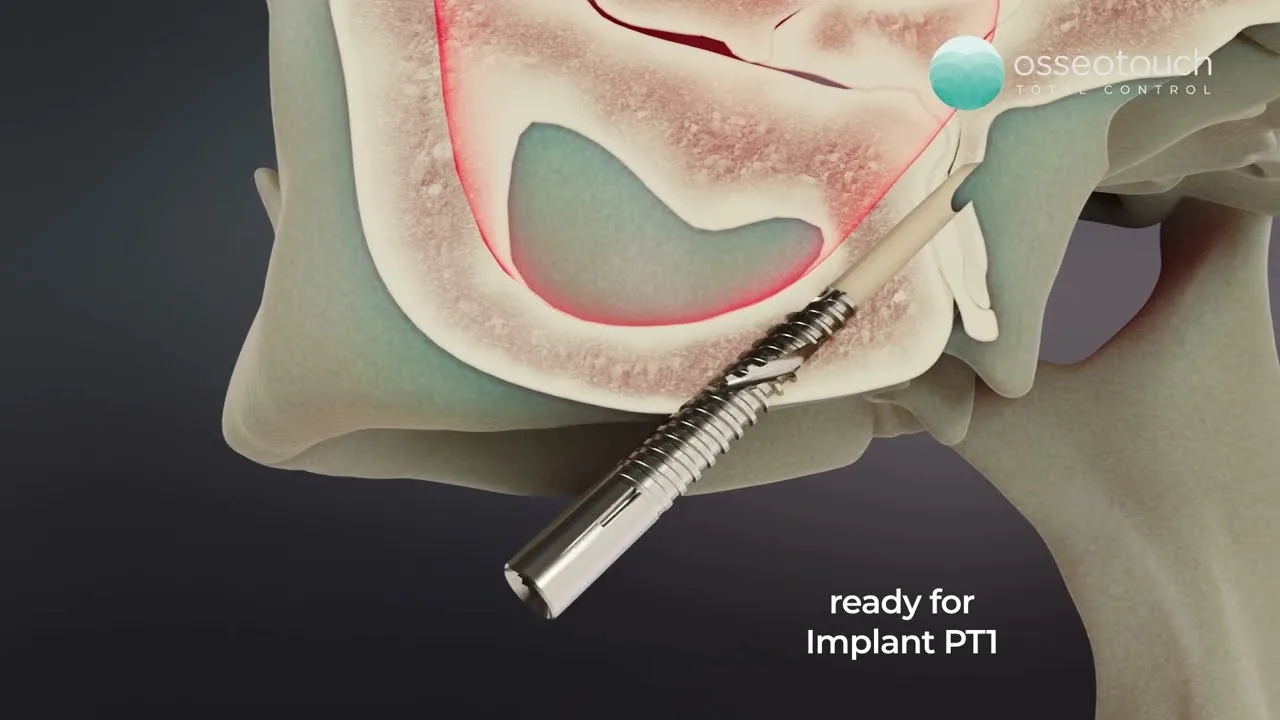
Osseotouch is pleased to introduce PT1, the new solution for implantology. Osseotouch is expanding into the world of oral surgery with PT1, the first Osseotouch implant born from the desire to apply the characteristics of MAGNETODYNAMICS technology underlying the Magnetic Mallet to a surgery that makes pterygoid site preparation easier. It is...
Read articleClose
Osseotouch is pleased to introduce PT1, the new solution for implantology. Osseotouch is expanding into the world of oral surgery with PT1, the first Osseotouch implant born from the desire to apply the characteristics of technology based on MAGNETODYNAMICS underlying the Magnetic Mallet to a surgery that makes pterygoid site preparation easier.
It is a simple and pragmatic implant, capable of fully exploiting the bone condensation of the surgical sequence applied with dedicated osteotomes for the Magnetic Mallet. The design of PT1 combined with the technique based on MAGNETODYNAMICS fully exploits all the anatomical advantages of this bone structure, enhancing the micro-invasiveness of this protocol and promoting the improvement of cancellous bone quality in the pterygomaxillary area.
From today, the search for implant stability and the correct fixture inclination to reach the pterygoid plate will be more immediate, thus achieving optimal immediate loading.
Extraction and implant site preparation with Magnetic Mallet: don't miss the new case by Dr. Pietro Cacciamani!
The clinical case we present today shows Dr. Pietro Cacciamani completing a case of extraction and implant site preparation using the Magnetic Mallet. Following the compromise and fracture of tooth 15 and the subsequent formation of a large area of osteolysis and fibrotic tissue, Dr. Pietro Cacciamani...
Read articleClose
The clinical case we present today shows Dr. Pietro Cacciamani completing a case of extraction and implant site preparation using the Magnetic Mallet.
Following the compromise and fracture of tooth 15 and the subsequent formation of a large area of osteolysis and fibrotic tissue, Dr. Pietro Cacciamani uses the Magnetic Mallet to perform this case of extraction and implant site preparation with subsequent implant placement in the area of teeth 15 and 16.
The excellent stability achieved is made possible thanks to the exclusive use of the Mallet and the technology based on MAGNETODYNAMICS underlying the device.
To discover this and many other cases, join the MAGNETODYNAMICS WhatsApp group, a space where you can share, discuss, and review clinical cases with other dentists and improve your daily practice.
№ 27
·Article
Share. Learn. Grow. Join our WhatsApp group on MAGNETODYNAMICS technology!
The Osseotouch community is growing more than ever, and that's why Osseotouch has created a MAGNETODYNAMICS space reserved for all experts, beginners, or those still uncertain whether to apply the technology underlying the Magnetic Mallet in daily practice: the MAGNETODYNAMICS WhatsApp group. Whether you are an expert in...
Read articleClose
The Osseotouch community is growing more than ever, and that's why Osseotouch has created a space dedicated to MAGNETODYNAMICS reserved for all experts, beginners, or those still uncertain whether to apply the technology underlying the Magnetic Mallet in daily practice: the MAGNETODYNAMICS WhatsApp group.
Whether you are an expert in technology based on MAGNETODYNAMICS or not, our WhatsApp group is a place to share cases and experiences, learn from experts, and develop new skills.
You can share your clinical cases with other dental colleagues and ask for their advice to improve your work performance and learn about all the advantages of this technique underlying the Magnetic Mallet.
Mallet Room: the new discussion space on MAGNETODYNAMICS technology
Osseotouch is pleased to introduce the Mallet Room: a dedicated discussion space on MAGNETODYNAMICS technology, to answer all your questions about the technology underlying the Magnetic Mallet and other Osseotouch devices. It is available in full version on Tootor. Manuel Scali, CEO of Osseotouch, explains how the impulse generated by MAGNETODYNAMICS technology...
Read articleClose
Osseotouch is pleased to introduce the Mallet Room: a dedicated discussion space on technology based on MAGNETODYNAMICS, to answer all your questions about the technology underlying the Magnetic Mallet and other Osseotouch devices. It is available in full version on Tootor.
Manuel Scali, CEO of Osseotouch, explains how the impulse generated by MAGNETODYNAMICS technology present in the Magnetic Mallet originated and what the principles of this technology are, founded on power, precision, and control.
Do you have any questions about MAGNETODYNAMICS technology? Leave a comment below the post.
Implant placement with sinus floor elevation in the course on Implant Site Development with MAGNETODYNAMICS technology
The following clinical case shows Dr. Cardaropoli successfully completing a case of placement of two implants with crestal maxillary sinus floor elevation using the Magnetic Mallet. This is one of the many cases that will be performed in the course on Implant Site Development with MAGNETODYNAMICS technology...
Read articleClose
The following clinical case shows Dr. Cardaropoli successfully completing a case of placement of two implants with crestal maxillary sinus floor elevation using the Magnetic Mallet. This is one of the many cases that will be performed in the course on Implant Site Development Using MAGNETODYNAMICS.
Prof. Daniele Cardaropoli, dentist and dental prosthodontist, professor of Periodontology, and author of numerous international publications on periodontology, implantology, and interdisciplinary orthodontics, will dedicate two days of full immersion on MAGNETODYNAMICS technology to acquire hands-on skills with the Magnetic Mallet.
The course, worth 16 ECM credits, will be held in Torino at the ProEd center on May 6 and 7, 2022.
Fill out the form to be contacted by phone for more information.
№ 30
·Article
Case of Maxillary Split-Crest and implant placement with FIRST, the first instrument of the Magnetic Mallet!
Osseotouch is pleased to present a case of Maxillary Split-Crest and subsequent implant placement performed by Dr. Fernando Gómez-Ferrer, Doctor of Medicine and Surgery, graduate in Dentistry and Specialist in Implantology, Surgery and Oral Rehabilitation, a leading professional in patient dental care. The case is performed with FIRST, the first...
Read articleClose
Osseotouch is pleased to present a case of Maxillary Split-Crest and subsequent implant placement performed by Dr. Fernando Gómez-Ferrer, Doctor of Medicine and Surgery, graduate in Dentistry and Specialist in Implantology, Surgery and Oral Rehabilitation, a leading professional in patient dental care.
The case is performed with FIRST, the first instrument of the Magnetic Mallet, which facilitates site preparation by making it completely drill-free. In this clinical case, Dr. Fernando Gómez-Ferrer, following the loss of the posterior abutment of a patient's bridge and her unwillingness to undergo lengthy and painful surgical procedures, opts for implant site preparation and subsequent implant placement using FIRST.
After cutting the bridge, the anterior abutment component was secured by means of endodontic treatment and post reconstruction, and the bridge was joined to the abutment to prevent the area from being edentulous during implant placement. After making a hole at the position of maximum intercuspation and at the center of occlusion of the tooth (the implant fixation point), the flap is opened, and with the FIRST instrument of the Magnetic Mallet, the angle is followed and the desired depth is reached using low power to maintain the angulation and the distance between the implants.
The implants are inserted at low speed and maintaining the best possible angulation. Before suturing, the periosteum is incised down to the depth of the vestibule to obtain a better suture without mucosal tension. In the follow-up radiographs, it can be seen that the result obtained is identical to the project that had been planned.
The FIRST instrument of the Magnetic Mallet is able to easily find the angulation in implant placement, providing the correct path from the very first impulse without removal of bone tissue. In this case the implants are inserted at low speed and maintaining the best possible angulation.
Do you have any questions for Dr. Fernando Gómez-Ferrer? Leave your comment below the post. Discover everything about FIRST of the Magnetic Mallet.
Doctor of Medicine and Surgery, graduate in Dentistry and Specialist in Implantology, Surgery and Oral Rehabilitation, he is a leading professional in patient dental care.
In 1991 he began his work at the Gómez-Ferrer Dental Clinic located in the center of Valencia, and since then he has maintained the care and attention of patients at the head of a team of highly qualified professionals that guarantees the treatments performed and maintains their evolution over time.
His training as a Specialist in Implantology is similar to the development of this surgical specialty almost from its inception. Each year he attends courses on technological innovation and hands-on skills both in Spain and in various countries in Europe and the United States. He believes that the quality of the materials and techniques used is essential to obtain good results and offer greater guarantees to patients.
He currently also collaborates as:
- Lecturer at CICORD (Implantology and Oral Surgery Courses in the Dominican Republic).
- Member of SEI (Spanish Society of Implants).
- Member of SOCE (Spanish Society of Digital Dentistry and New Technologies).
№ 31
·Article
Magnetic Mallet extractions: increasing research supporting MAGNETODYNAMICS technology!
A few months after the publication of scientific research on the benefits of MAGNETODYNAMICS technology in soft bone obtained with the use of the Magnetic Mallet, on February 10, 2022, new research was published in Materials on the remarkable results obtained from the application of MAGNETODYNAMICS technology in extraction cases.
Read articleClose
A few months after the publication of scientific research on the benefits of MAGNETODYNAMICS technology in soft bone obtained with the use of the Magnetic Mallet, on February 10, 2022, new research was published in Materials on the remarkable results obtained from the application of MAGNETODYNAMICS technology in extraction cases.
The study is based on a comparison of extractions performed with the technique based on MAGNETODYNAMICS of the Magnetic Mallet versus extractions using traditional techniques.
The research showed that extraction performed with the technique based on MAGNETODYNAMICS generates better preservation of the alveolar ridge volume and at the same time less loss of the external contour.
The analysis showed in fact a reduction in the loss of the external contour compared to the conventional tooth extraction technique. Furthermore, less traumatic procedures appear to be able to better preserve the alveolar ridge volume (reduction of around 22% with less traumatic extractions).
Do you have any questions about the scientific publication? Leave your comment below the post.
Interview with Dr. Francisco Marchesani – Expansion, sinus floor elevation and implant placement
Osseotouch had the pleasure of interviewing Dr. Francisco Marchesani, an expert in Oral Maxillofacial Implantology.
Read articleClose
Osseotouch had the pleasure of interviewing Dr. Francisco Marchesani, an expert in Maxillofacial Oral Implantology, regarding the interesting clinical case of expansion, sinus floor elevation and implant placement performed with the Magnetic Mallet shown in the following video.
Osseotouch: Doctor, can you describe the case and explain why you chose to use MD technology?
Dr. Francisco Marchesani: It is a severe case of horizontal atrophy. On the right maxillary side there is a recent extraction. On the left maxillary side there is massive horizontal atrophy in the area of the first premolar and molar, in addition to horizontal pneumatization with bone loss in the maxillary sinus. The proposed treatment is therefore horizontal GBR on both sides plus elevation of the maxillary sinus floor on the left side. Bone condensation in extreme situations is a way to achieve implant stabilization. Osteodilation/osseodensification techniques have been used through mechanical mallets and dilators with various designs, but they are extremely invasive in the local situation and for patient comfort. They are also associated with vertigo syndrome. At the same time, there are rotary instruments for osteocondensation that I have used, but they require multiple steps and ultimately do not work in extreme situations such as this clinical case. Simultaneous implant installation is evaluated, and the decision is made to treat the osteotomies with rotary instruments only as a guide and to take advantage of the expansion capability of the Magnetic Mallet technology. Its biological foundation, in the sense of being minimally invasive, osteo-condensing, controllable and preserving as much as possible the small amount of residual bone, makes it possible to install the implants in the same surgical session.
Osseotouch: What was the initial bone quality and how did the use of MAGNETODYNAMICS technology improve the condition?
Dr. Francisco Marchesani: The initial bone, from the standpoint of its quantity, is extremely compromised horizontally and also of very poor quality. This situation would normally prevent the placement of the implants in the same surgical session in which the reconstruction is performed. For this reason it is necessary to improve the quality and quantity of bone. Through the use of the MAGNETODYNAMICS technology that the Magnetic Mallet provides, it is possible to work the bone, taking full advantage of its expansion capability. The high energy transmitted in a very short period of time but at the same time with high control make this instrument a perfect tool for this type of situation. It therefore manages not only to stabilize the implant for osseointegration, but also to position it in its ideal prosthetic position by working the bone toward the ideal area.
Osseotouch: Was the directionality of the osteotomy axis facilitated by the use of osteotomes for MAGNETODYNAMICS?
Dr. Francisco Marchesani: One of the major advantages of the Magnetic Mallet over the use of burs is the directionality that can be given to the preparation by using the osteotome axis as a guide for the prosthetically guided position of the implant. It is very easy to guide the preparation by following the direction of the adjacent teeth as a reference, or even through a conventional prosthetic guide. The use of straight and/or angled osteotomes facilitates the correct positioning of the implants.
Osseotouch: How do you evaluate the biological response in terms of new bone tissue formation?
Dr. Francisco Marchesani: From a purely biological standpoint, beyond the stability achieved, the technology offered by the Magnetic Mallet supports maximum bone vitality. On the one hand, no heat is generated, as a rotary instrument does, and on the other hand it avoids the bone loss generated by rotation in most bur systems. This suggests that local biological conditions are better than those offered by traditional rotary systems.
In situations where expansion is indicated, what is essentially done is to create a four-sided biological cage that has a great osteoformative capacity and that also provides stability for the graft to be used. One of the significant features when you start using this instrument is the vascularization that is achieved in the surgical bed. There is abundant bleeding from the bone. This is a situation that often cannot be obtained using rotary instruments. In summary, the use of the Magnetic Mallet provides an ideal biological bed for the formation of new bone.
Do you have any questions for Dr. Francisco Marchesani? Leave a comment below the post.
Dr. Francisco Marchesani completed his university studies at the Universidad de Concepción, Chile, in 1986, where he earned his degree in dentistry. In 1987 he joined the Department of Oral Surgery at the Faculty of Dentistry of the Universidad de Concepción as instructor faculty. In 1990 he began his studies in the area of Reconstructive Dento-Alveolar Surgery at the Department of Maxillofacial Surgery of Ohio State University under the guidance of Prof. Dr. Larry Peterson.
In 1993 he studied at the Albert Ludwig University of Freiburg, Germany, with Prof. Dr. Gisbert Krekeler as his tutor in the area of implantology and reconstructive maxillofacial surgery. In 1993 he came into contact with the Centro Dexeus in Barcelona, Spain, and pursued implantology studies under the supervision of Prof. Dr. Joan Pi Urgell, a leading disciple of Prof. Branemark.
On returning to the Universidad de Concepción, he was put in charge of the Implantology Unit, of which he was director, and organized the implantology program for university students. In 2005 he organized, with the University of Ghent, Belgium, and Nijmegen, Netherlands, an exchange program at the undergraduate, postgraduate and teaching levels, of which he has been coordinator for over 10 years.
Former associate professor at the Universidad de Concepción and former professor in the Department of Pathology and Diagnosis. He was responsible for the Surgical Area of the postgraduate continuing-education courses: Prosthodontics, Periodontology and Implantology, Implantology for Maxillofacial Surgery and the Specialization Course in Implantology with a focus on Reconstruction and Aesthetics.
He is an active member of the Chilean Society of Implantology, a member of the American Academy of Osseointegration and of the European Association for Osseointegration.
In October 2011 he visited the Centro di Chirurgia del Viso in Parma, Italy, and together with Dr. Andrea Menoni, inventor of the BoxTechnique, they introduced this technique in Latin America and in Europe. He was named International Box Technique tutor in October 2012.
He has served as international BoxTechnique tutor at the Université Paris V in 2012 and 2013, and at ICLO Arezzo Center, Italy. In 2014 he organized the continuing-education program on fresh cadavers in collaboration with the Pontificia Universidad Católica de Chile.
In 2016 the Marchesani Clinic and Marchesani Education project took shape, of which he is clinical director. He is currently Director of the Advanced Implantology Improvement Program (PIA) and of the Clinical Residencies Program at Clinica Marchesani.
He is director of the Ossix Community and Best Practice, whose goal is the proper use and management of biomaterials for reconstruction. He is a key clinician for several international implant and biomaterials companies. His hallmark is independence and absence of conflicts of interest in his work as a clinician, professor and lecturer.
№ 33
·Article
Osseotouch Surgical Instruments: Italian genius, German steel
New Osseotouch Surgical Instruments: unique in design, effectiveness and quality. Reusable, sustainable. Download the catalog!
Read articleClose
From 2022 onward, Osseotouch will be more and more about Oral Surgery.
We continue to manufacture, select and distribute products with unique performance and effectiveness on the market, and we do so with the goal of improving the professional life of dentists worldwide.
The brand-new Osseotouch surgical instruments are made exclusively from German steel, offering superior quality with no compromise.
Why are these surgical instruments different, unique?
They are inspired by sustainability principles: some of the instruments in the catalog are reusable multiple times
The design is conceived and tested by the excellence of Italian dentistry. The raw material is natural German steel.
They offer outstanding comfort thanks also to the soft-touch coating, unique on the market.
A few previews?
Straight from the operating room, Active Box provides control of the surgical stock organized by activity, ensuring sterilization through an interchangeable PTFE filter with a 1,200-cycle lifespan, with no pouching and with… zero waste, zero plastic, with fully secure management.
Our Bone Scraper is reusable, effective and sharp. Properly angled for autologous bone harvesting and guaranteed up to 15 uses, it cuts the operating cost in half.
The MOLT periosteal elevator, coated in black soft touch with the working surfaces in natural steel, ensures maximum effectiveness and cutting performance. For the MOLT and all sharp instruments we also provide a convenient resharpening service.
You can book a visit from one of our sales representatives to try our new instruments by contacting us by phone at the numbers shown at the top of the page, or by writing us an email, and we will get back to you in no time!
№ 34
·Article
Burs vs. Magnetic Mallet: the future is up to 4 times brighter for implantologists worldwide!
The Magnetic Mallet improves bone quality: Prof. Baldi and Prof. Schierano have demonstrated the advantages of using our device compared with burs at the biomolecular, histological, clinical and radiological levels.
Read articleClose
The Magnetic Mallet improves bone quality in implantology: it is now official and scientifically proven!
Our latest research on the benefits of MAGNETODYNAMICS technology in soft bone has been published in Materials.
Prof. Gianmario Schierano and Prof. Domenico Baldi have demonstrated, at the biomolecular, histological, clinical and radiological levels, what happens when the Magnetic Mallet is used compared with burs.
Year-end tax advantages for purchasing the Magnetic Mallet
Book a consultation with the Osseotouch team and discover the convenience of purchasing the Magnetic Mallet at year-end!
Read articleClose
Year-end is the best time to upgrade to MAGNETODYNAMICS technology!
If you too are ready for this change, know that we are fully available to explain all the tax benefits you can take advantage of to acquire the Magnetic Mallet or Easyroot.
We will provide you with a consultant who, in 10 minutes, will walk you through the various options available to take advantage of the current incentives and identify the one that best suits you.
We can tell you in advance that the benefits are significant: we are talking about a percentage that ranges from 10% to 45%. Why miss this opportunity?
The transition to MAGNETODYNAMICS technology is virtually inevitable: nothing simplifies extractions, condenses bone, and facilitates sinus lift procedures and controlled ridge expansion like the Magic Magnetic Mallet!
We invite you to join the MAGNETODYNAMICS family — we assure you that you too will say: "I should have gotten it sooner"!
Watch the video by Dr. Luca Boschini, designer of the Magnetic Mallet osteotome line that improves implant site preparation and the sinus lift procedure like never before.
Read articleClose
Black Ruby is a set of 5 instruments designed by Dr. Luca Boschini, an experienced user of the Magnetic Mallet, together with Osseotouch R&D.
Black Ruby was developed after extensive work to define the perfect double-conical tip geometry and to bring together all the best of technological innovation, including a DLC coating.
We have created a line of osteotomes that facilitate, like never before, the preparation of the implant site and the sinus lift procedure.
And on top of that, they are also beautiful: black and extremely elegant!
Want to find out why the first production run sold out before launch?
Listen directly to the explanation from the person who designed them, Dr. Boschini, who summarizes the unique features of the osteotomes and their benefits in this video:
Do you know all the new instruments for the Magnetic Mallet? Discover Genoa, First and Black Ruby here: https://bit.ly/3zT3WaJ
№ 37
·Article
Osseotouch @IDS Cologne Hall 10.1 Stand B47
Osseotouch at IDS Cologne 2021: come visit stand B47 in Hall 10.1 to discover "Bone Shape Implantology". We look forward to seeing you!
Read articleClose
Osseotouch will take part in the IDS Cologne 2021 trade fair to present Bone Shaping Implantology, the concept that revolves around our company identity, our innovative approach to modern dentistry, and therefore around our products.
In 2021 we introduced many new products: a new device, new instruments and a new product line:
Easyroot: the device that defines the new standard for extractions with MAGNETODYNAMICS technology.
FIRST: the first instrument to use with the Magnetic Mallet to find the perfect axis in site preparation, completely drill-free.
Genoa: a set of three instruments for safe, precise and controlled ridge expansion.
Easy Pin: for much easier membrane fixation with the Magnetic Mallet.
Easy In: to work with MAGNETODYNAMICS technology in the lower jaw.
VITREX Sutures: minimally invasive sutures, with the needle made of Japanese steel, extremely fine gauges, transparent threads, brought directly from plastic surgery to modern dentistry.
From September 22 to 25, four intensive days during which it will be possible to meet, get to know and explore MAGNETODYNAMICS technology, try our devices — the Magnetic Mallet and Easyroot — and learn about all the 2021 novelties as well as a few previews of what is coming in 2022.
We look forward to seeing you!
№ 38
·Article
Osseotouch Sutures: minimally invasive and aesthetic
Osseotouch: minimal invasiveness, maximum aesthetics, needles made from Japanese steel, 270 references.
Read articleClose
Using minimally invasive sutures that can also guarantee excellent aesthetic results is by now a need shared by many dentists.
To meet the growing demand from our clients for high-quality, maximally aesthetic and minimally invasive products, Osseotouch has chosen to distribute VITREX sutures, signing an exclusive distribution agreement for Italy.
VITREX sutures originate and are used in plastic surgery, are absorbable, and feature:
extremely fine gauges (4-5-6-7/0)
needles made exclusively from Japanese steel that does not bend, and is durable and sharp
transparent thread for maximum aesthetic results
We have chosen to offer 270 different references: a broad product range to meet every surgical need.
Here are the top 5 — a selection within our suture selection — that will allow you to evaluate their quality, characteristics and benefits:
Osseotouch Levacorone: a minimally invasive solution!
Osseotouch Levacorone: what do those who already use it think? Discover the benefits and features straight from the users!
Read articleClose
On the occasion of the official launch of Levacorone — a product already on the market but on which we had not yet had the chance to shine the spotlight — we wanted to give the floor directly to the users to explain its features and benefits.
Watch what some of our colleagues have to say in the video:
Our Levacorone allows crowns and bridges to be removed by fully leveraging the Magnetic Mallet technology, causing the deformation and crumbling of the cement with the consequent loss of crown stability for an immediate detachment. The force generated is three times that of force applied manually, thanks to our patented and significantly less invasive technology.
Podcast interview with Prof. Domenico Baldi about the new Osseotouch instrument for safe and precise ridge expansion!
Read articleClose
Claudio De Giglio, Partner and CEO of Osseotouch, on the occasion of the official launch of GENOA, interviewed the designer of the new Magnetic Mallet instruments for safe and controlled ridge expansion, Prof. Domenico Baldi.
Listen to the exclusive podcast with Prof. Domenico Baldi:
You can buy Genoa directly in the Osseotouch shop at this link: GENOA Full Set.
Curriculum vitae of Prof. Domenico Baldi
Dr. Domenico Baldi was born in Genoa, Italy, on February 2, 1963. He graduated cum laude in 1987 from the School of Medicine of GE. He earned his DDS specialization in 1990 at the Università degli Studi di GE. In 1998 he studied Implantology at the Faculty of Medicine of PI. Adjunct Professor at the Università degli Studi di GE. Full Professor of Prosthodontics and Implantology in an Advanced Course and in an International Master's Program at the Università degli Studi di GE, in the Advanced Training Course in Surgery at La Sapienza – Università di Roma, and Full Professor of Prosthodontics and Implantology in an International Master's Program at the University of PI.
He has published several scientific articles. Co-author of the book "Handbook of Bioceramics and Biocomposites", Springer International Publishing, Editor: Iulian Vasile Antoniac.
Speaker at numerous national and international congresses. Member of SIOPI. QDT — Quintessence of Dental Technology (Italian edition), member of the Editorial Board. Active member and founder of IPA, and Honorary Member of SRPDMF. Affiliate member of EAED. Founding member of ICP. Active member of IADDM. President of IPA (2014–2016). Board member of IADDM (2019–2021). Private practice in Genoa.
№ 41
·Article
GENOA: safe, precise and controlled ridge expansion
GENOA: the set to use with the Magnetic Mallet! Watch the animated video and discover how GENOA works for ridge expansion!
Read articleClose
We are proud to launch the "GENOA" set — three new instruments to perform safe, precise and controlled ridge expansion.
GENOA is named in honor of Genoa, the city of the designer of the set, Prof. Domenico Baldi, and was created to perform the first entry into the thinnest crests, engaging the bone in complete safety.
These new instruments have been designed and built with sharp, high-performance tips. The GENOA set includes:
Genoa 1
Genoa 2
Genoa 3
to work in all quadrants.
These new instruments will allow you to perform horizontal expansion without any removal of bone tissue and with a single device.
Want to better understand how it works?
Watch this animated video:
You can buy the Genoa set directly in the Osseotouch shop at this link: GENOA Full Set
№ 42
·Article
AlTurki Medical – Osseotouch's new importer for Saudi Arabia
Starting today, Osseotouch is officially represented in Saudi Arabia by AlTurki Medical as part of its commercial expansion in the Middle East. Discover the details!
Read articleClose
Starting today, Osseotouch is officially represented in Saudi Arabia by AlTurki Medical, a company founded in 1974 that represents a long-standing presence in the country, having always distributed the world's leading brands in the dental field.
Widespread throughout the country thanks to its 5 offices and a network of distributors, AlTurki today serves approximately 700 public and private clinics and hospitals, and represents for Osseotouch an important hub in the Middle East for the commercialization of its products.
Dr. Mohsen Khader, CEO of AlTurki Medical, states: "Magnetic Mallet is the new generation in dental surgery, We are excited to start collaboration with Osseotouch to deliver it to every dentist in KSA".
Manuel Scali and Claudio De Giglio, partners and CEOs of Osseotouch, declare: "Osseotouch continues its internationalization process and chooses AlTurki Medical, with the goal of establishing a presence in an important Middle Eastern market and ensuring steady revenue growth in foreign markets".
Osseotouch – Platinum Sponsor of NYU Italian Association
Would you like to attend the webinars of NYU's Back to School 2021 program for free? Read the article to find out how to request access!
Read articleClose
Osseotouch has always been committed to promoting continuing education in dentistry. This year we have decided to support and back, as platinum sponsor, the I.A.N.Y.U.G. – New York University Italian Graduates Association, the non-profit association founded with the goal of bringing together at the national level all the colleagues who have already completed – or are currently attending – the short-term advanced training program of the College of Dentistry Linhart Continuing Dental Education Program.
Specifically, Osseotouch supports the "Back to School 2021" program, an exclusive series featuring leading speakers among the most cited in international literature, who, on a weekly basis, present the most current and innovative aspects of Implantology, Digital Flow, and the methods of Regenerative Surgery and Oral Rehabilitation.
As Platinum Sponsor of the NYU Italian Association, we can invite our customers — and we also include the future customers who follow us 😉 — to attend, free of charge, the webinars organized for the Back To School 2021 program, normally reserved exclusively for members. Here is the upcoming months' program: https://www.uniny.it/webinar-back-to-school-2021.html
To attend, simply send an email to cs@osseotouch.com requesting access a few days before the scheduled date.
Enjoy your continuing education!
"Avoid doing what you do not know, but learn everything you need to know."
Pythagoras (Greek philosopher)
№ 44
·Article
Podcast: "FIRST" with Prof. Domenico Baldi
Podcast interview with Prof. Domenico Baldi on the new Osseotouch instrument for drill-free implant site preparation.
Read articleClose
Claudio De Giglio, Partner and CEO of Osseotouch, interviewed Prof. Domenico Baldi, one of the founding fathers of surgery based on MAGNETODYNAMICS, about the advantages of using the new FIRST instrument, the first to be used with the Magnetic Mallet.
Listen to the exclusive podcast with Prof. Domenico Baldi:
Would you like to ask Prof. Baldi a question about the use of FIRST? Comment on the article!
Curriculum vitae of Prof. Domenico Baldi
Dr. Domenico Baldi, born in Genoa, Italy, on February 2, 1963. Graduated with honors in 1987 from the Genoa School of Medicine. Specialized DDS in 1990 at the University of Genoa. He studied Implantology in 1998 at the Faculty of Medicine of Pisa. Adjunct Professor at the University of Genoa. Full Professor of Prosthodontics and Implantology in an Advanced Course and in an International Master Program at the University of Genoa, in the Advanced Training Course in Surgery at La Sapienza University of Rome, and Full Professor of Prosthodontics and Implantology in an International Master Program at the University of Pisa.
Author of numerous published scientific articles. Co-author of the book "Handbook of Bioceramics and Biocomposites," Springer International Publishing, Editor: Iulian Vasile Antoniac.
Speaker at numerous national and international congresses. Member of SIOPI. Member of the Editorial Board of QDT — Quintessence of Dental Technology (Italian edition). Active member and founder of IPA, and Honorary Member of SRPDMF. Affiliate Member of EAED. Founding Member of ICP. Active Member of IADDM. President of IPA (2014-2016). Board Member of IADDM (2019-2021). Private practice in Genoa.
№ 45
·Article
FIRST: the first instrument to use with the Magnetic Mallet!
FIRST: the first instrument to use with the Mallet! Watch the animated video and discover how FIRST works for implant site preparation.
Read articleClose
It's called FIRST and it is the first instrument to use with the Magnetic Mallet!
Today we are launching FIRST, an essential instrument in the Magnetic Mallet instrumentation lineup because it makes site preparation easier and completely drill-free.
Achieving the right angulation when placing tilted implants is often crucial: thanks to the geometry of the working tip of FIRST, you can establish the correct trajectory from the very first impulse without resorting to rotary instruments, without removing bone tissue, and without the need for irrigation to prevent overheating.
Thanks to its faceted design, FIRST ensures secure directionality even in ridges with severe resorption, immediately creating the proper alignment for the next step in osteotomic surgery.
The result? A more precise and conservative approach with zero heat, zero bone sequestration, and zero irrigation.
Here is what the lance-shaped working tip looks like:
Osseotouch interviewed Dr. Luca Arduini regarding a case of implant placement with MAGNETODYNAMICS technology and the easy-in.
Read articleClose
Osseotouch had the pleasure of interviewing Dr. Luca Arduini, an expert in implant surgery and a user of MAGNETODYNAMICS technology for 11 years, regarding the interesting clinical case documented in the following video. The procedure was performed with the assistance of the Magnetic Mallet and the easy-in osteotomes designed by Dr. Arduini himself together with Dr. Zuccaro.
Osseotouch: – Good morning, Doctor, it's a pleasure to meet with you again. Thank you for the case you wanted to share with all of us. As a first question, I would simply ask you to describe the clinical case to complement what we see in the video.
Dr. Luca Arduini: – Good morning, certainly, with pleasure. The procedure is a post-extraction case involving teeth 1.1, 1.3, 2.1, 2.3, and 2.6, with implant placement at site 1.6. From the radiographic evaluation and oral examination, I observed the extrusion of 2.6 with exposed root, the endodontic failure of 2.3 with root fracture, the endodontic failure of 1.3 with root fracture, grade 3 mobility of 1.5, and extrusion of 1.7 with exposed root. For a definitive resolution, in agreement with the patient, we decided to proceed with full mouth disinfection and the placement of six implant fixtures with immediate loading, using the compaction technique based on MAGNETODYNAMICS with prototype straight AZ osteotomes for the upper maxilla. Subsequently, a complete rehabilitation of the mandible was also performed with an all-on-four procedure.
Osseotouch: – Thank you, Doctor, as always very thorough. May I ask why you chose to use the Magnetic Mallet in this specific procedure?
Dr. Luca Arduini: – What the patient wanted was a quick procedure, with guaranteed results, and above all with little post-operative pain. With the Magnetic Mallet and the AZ osteotomes of the easy-in that I designed, I always manage to score the winning goal! Without removing bone tissue, with the sharp AZ osteotomes I "collected" and shifted bone where needed, managing to insert six implant fixtures with stability of over 70 newtons — stability that allowed for immediate loading. With the right learning curve, compaction based on MAGNETODYNAMICS can be used in a comprehensive 360-degree manner, even, as in this procedure, for full-arch rehabilitation.
Osseotouch: – Excellent, thank you. One last question for the readers — can you tell us concretely what the advantages were for you as the operator and for the patient by using MAGNETODYNAMICS technology?
Dr. Luca Arduini: – As per protocol in my practice, we always ask patients, after a few days, about their post-operative impressions, their symptoms, and whether they experienced any particular discomfort. The reason I use MAGNETODYNAMICS technology in all the implant surgical procedures I perform is because the patients, just a few hours after the procedure, show no problems, succeeding in the vast majority of cases — with immediate loading — in restoring proper masticatory, phonetic, and aesthetic function. Furthermore, something very important in this COVID-19 pandemic situation that unfortunately still involves all of us, the use of the Magnetic Mallet allows us to work in complete safety without producing aerosols, and since irrigation is not necessary, the operator has greater visibility and greater precision. This allows us to cut working time in half, thereby causing less stress to the patient.
Osseotouch: – Thank you so much for sharing this interesting case and your clinical choices with us. We invite readers to send any further questions about the compaction technique and the use of the easy-in osteotomes. See you soon!
In 2006 he obtained his degree in Dentistry and Dental Prosthetics from "La Sapienza" University of Rome. In 2011 he obtained the second-level Master's degree in Endodontics with honors from the same university. In 2017 he obtained the post-graduate theoretical-practical certification in implant prosthodontics from the San Raffaele Dental School of the University of Milan. In 2017 he also took part in the theoretical-practical advanced training course with hands-on exercises on human anatomical specimens, lectures, and chair-side training. An expert user of MAGNETODYNAMICS technology, he contributed to the research and development of the Magnetic Mallet by designing the easy-in osteotomes for working in the mandible. An expert in implant surgery using regenerative and expansion techniques (ERE) at partial thickness with exceptional results in the mandible, and in the technique of vertical ridge expansion of the edentulous crest with displacement of the maxillary sinus floor using MAGNETODYNAMICS technology. Trainer and speaker in many advanced training courses for "all on four" and "all on six" procedures and bone compaction with the Magnetic Mallet.
№ 47
·Article
Interview with Drs. J. Motta Jones and G. Menchini Fabris – osteocom channel "Extractions with MAGNETODYNAMICS"
Profs. Jason Motta Jones and Giovanni Menchini Fabris are the speakers of the osteocom channel dedicated to MAGNETODYNAMICS extractions. Discover the channel with the official trailer!
That is why we decided to interview Profs. J. Motta Jones and G. Menchini Fabris, who created the lectures for the channel. We want to share exclusively with you the educational perspective of the two instructors, who the channel is intended for, the choice of contents, how the lessons were conceived and designed, and why it is worth exploring 🙂
Enjoy!
Interview with Dr. Jason Motta Jones:
Interview with Dr. Giovanni Menchini Fabris:
The osteocom channel dedicated to extractions performed with Easyroot using MAGNETODYNAMICS is available here.
Would you like to ask the instructors a question? Comment on the article!
The osteocom channel dedicated to MAGNETODYNAMICS extractions!
Profs. Jason Motta Jones and Giovanni Menchini Fabris are the speakers of the osteocom channel dedicated to MAGNETODYNAMICS extractions. Discover the channel with the official trailer!
Read articleClose
Today, WE celebrate!
The educational project with osteocom dedicated to extractions performed with Easyroot using MAGNETODYNAMICS, our device dedicated exclusively to extractions, comes to light today!
We are proud of the result that the two exceptional speakers, Profs. J. Motta Jones and G. Menchini Fabris, have produced to allow everyone to discover the advantages of our technology — yes, indeed, MAGNETODYNAMICS technology truly makes the difference in extractions!
Thanks to the professors who believed in the project and created some fantastic lectures!
Thanks also to Stefano Carrera of osteocom for his professionalism, dedication to the project, and friendliness 🙂
Here is the exciting trailer 🙂 of the channel!
Would you like to ask the speakers a question? Comment on the article!
Dr. E. Rivarossa and Dr. N. Ciari – implant placement using MAGNETODYNAMICS technology
Osseotouch interviewed Dr. Rivarossa and Dr. Ciari regarding a case of implant placement with MAGNETODYNAMICS technology.
Read articleClose
Osseotouch had the pleasure of interviewing once again Dr. Enrico Rivarossa, D.M.D., D.D.S., specialist in oral surgery and dental prosthetics, expert implantologist and periodontologist, regarding the interesting clinical case documented in the following video. The procedure was performed together with Dr. Nicola Ciari, who used the Magnetic Mallet for the first time, and we report his impressions in this article.
Osseotouch: – Doctor, welcome back! Could you describe the clinical case and the reason why you chose MAGNETODYNAMICS technology? Dr. Enrico Rivarossa: – Certainly, with pleasure. The case concerns a patient in whom we decided to place 4 implants for mechanical reasons and not because they were prosthetically essential. Generally, when possible, I place a "backup" implant, so we even performed 5 osteotomies, then placed only 3 implants. We performed the second implant osteotomy in 47 to optimize the implant position and angulation: implants angled mesially, according to the RTEasy method, in order to facilitate all the surgical and prosthetic operations, in which only straight MUAs are used. We will complete the case with the finished prosthesis in three months — just as for the first case if you are interested, with photos and X-rays.
A tip for those approaching this technology: even when working at force level 1 or 2, after the procedure the patient experienced joint discomfort on the right side (opposite side), so it is advisable to support the mandible while administering the impulses.
Osseotouch: – Dr. Ciari, you used the Magnetic Mallet for the first time — would you like to tell us about your impressions? Dr. Nicola Ciari: – Let me preface by saying that I am a newcomer to the world of implantology, so I will not be able to provide a meaningful comparison with the other techniques of implant surgery (something for which the vast experience and competence of Dr. Rivarossa can compensate). I will therefore comment exclusively on the ease of approach, handling, use, and effectiveness of the Magnetic Mallet, from the perspective of a young dentist.
As for the initial approach and understanding of the instrument — although greatly facilitated by the explanations and demonstrations of Dr. Rivarossa — I did not encounter any difficulty. Obviously, it is easy to understand its operation and advantages, but it is even easier to be intimidated by its mechanism of action — namely the "Mallet," precisely.
Handling, even in inexperienced hands, is not at all difficult: the Mallet allows for a fairly secure grip, and its considerable weight provides a sense of stability. The inserts are few, easily identifiable, and easily replaceable. The clearly visible intensity levels and a simple pressure pedal for activation complete the picture of an intuitive and easily manageable instrument.
Use is less problematic than one might think. Since each press of the pedal corresponds to a single impulse, and each impulse corresponds to a 1-2 mm penetration of the insert — depending on the intensity setting and bone density — I never had the feeling that the instrument was escaping my control. On the contrary! The slow and controlled advancement and the excellent visibility of the millimeter markings on the inserts are excellent for a newcomer.
Inclination and direction can also always be kept comfortably under control thanks to the long bayonet-style insert. As for the different diameters reached at each height of the various inserts, however, they require a bit of memory — or some good assistants who can remind you.
Finally, regarding effectiveness, the results are excellent.
I am speaking, of course, in relation to a simple case carried out with the invaluable guidance of a colleague of enormous expertise like Dr. Rivarossa. Excellent primary stability, no intraoperative difficulty, and reasonable timing.
The only negative note: the patient complained of discomfort in the immediate post-operative period at the level of the TMJ — initially bilateral, then persistent on the right side.
The use of the Magnetic Mallet in the mandibular site requires some precautions to minimize the inevitable joint trauma. Overall a positive experience, I would say even beyond expectations.
Osseotouch: – Many thanks to both of you for sharing the case with us. Best of luck with your work!
Curriculum vitae of Dr. Enrico Rivarossa
1978-1988
The first 10 years at the practice in Fossano (CN).
Focus on Periodontics and Fixed Prosthodontics.
Experience at Boston University and various scientific publications in industry journals.
From 1988, among the first in Italy in Implantology and Osseointegration.
In 2003, one of the first to use LASER in the treatment of periodontal diseases (pyorrhea).
In 2006, again among the first in Italy, to use ALL-ON-4 and immediate-loading implantology.
In 2018, marking 30 years of work in implantology and a great number of patients rehabilitated on implants and natural teeth.
In 2020, 41 years from the first patient treated, the Prevention 4.0 Program and the Smile Italy project were born.
In 2021, he successfully uses Magnetic Mallet technology!
Video interview with Dr. Franco Giancola on the book – "Ceramic Implants: the Winning Challenge"
Video interview with Dr. Franco Giancola, author of the book "Ceramic Implants: the Winning Challenge," with a chapter dedicated to the synergy with the Magnetic Mallet.
Read articleClose
Manuel Scali, Partner and CEO of Osseotouch, interviewed Dr. Franco Giancola, author of the book: "Ceramic Implants: the Winning Challenge."
This text represents a valuable resource for responsible and forward-looking dentists who know how to seize the opportunities offered by the introduction of new materials that respect tissues and protect patients. The reader is guided through the study of zirconia, the operating phases, and clinical practice so that every implant placement can be a positive experience. One chapter of the book is dedicated to the synergy with the Magnetic Mallet as the leading technology chosen by the author in his implantology practice.
Dr. Franco Giancola's book is available with a 20 € discount off the cover price (Osseotouch agreement) here.
Would you like to ask Dr. Giancola a question about his book? Comment on the article!
MAGNETODYNAMICS Live Surgery – Dr. Luca Arduini – April 28, 2021
Join the Live Surgery with Dr. Luca Arduini on YouTube on April 28, 2021 at 1:00 p.m.!
Read articleClose
Extraction, drill-free implant site preparation, and immediate loading using the Magnetic Mallet: this is the focus of the Live Surgery that Dr. Luca Arduini, a user of MAGNETODYNAMICS technology for over 11 years, performed on YouTube on April 28, 2021 at 1:00 p.m.